
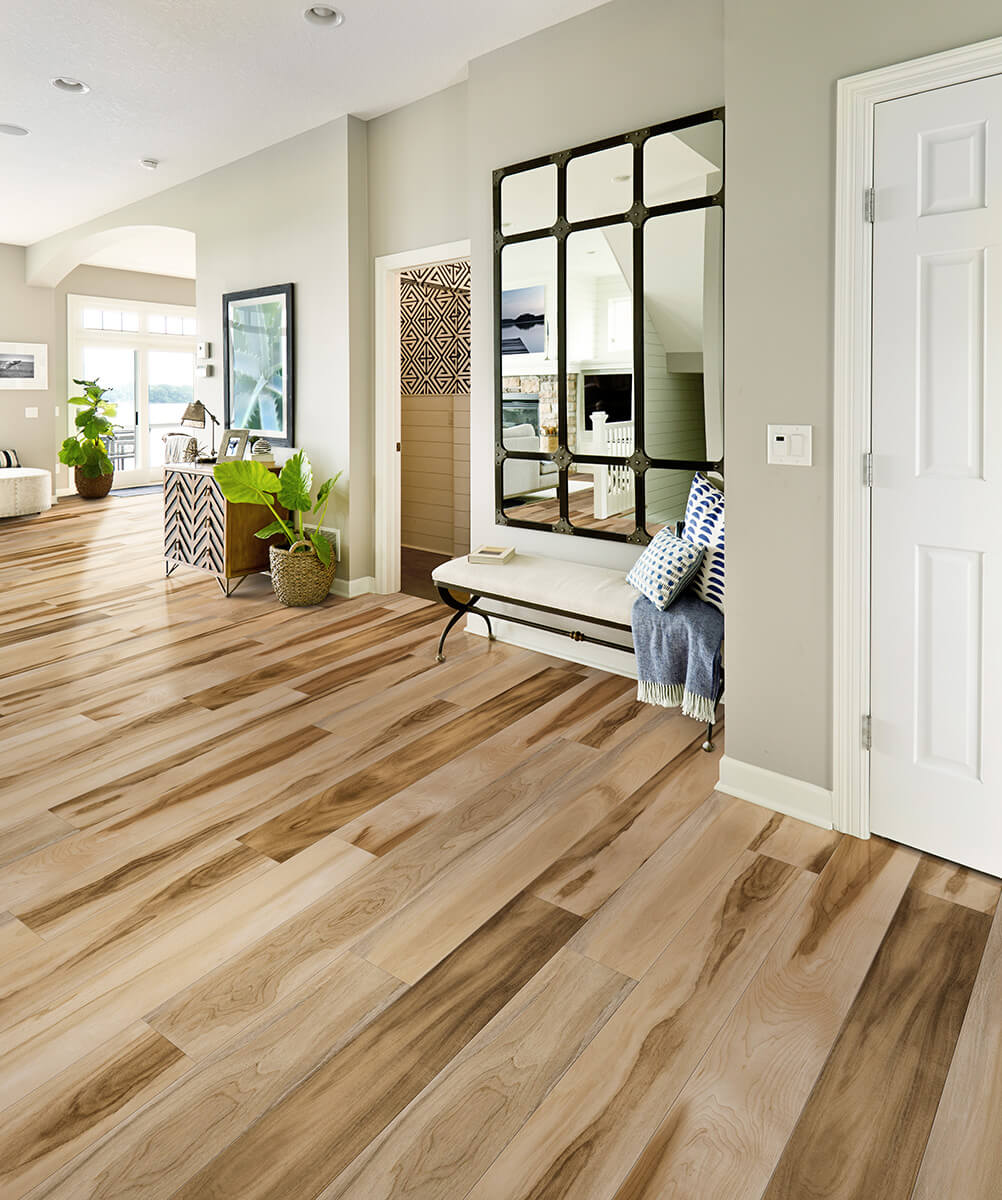
A contemporary home entry hallway foyer with bathroom and interior front door.
Your hallway is one of the busiest areas in your home. It is the first space guests see and one of the last areas you walk through before leaving the house. Every day, it deals with muddy shoes, dirt, pet claws, dropped bags, and constant foot traffic. Over time, all that activity can take a toll on ordinary flooring.
That is why choosing a durable flooring material is so important. Bamboo flooring has become a favorite among homeowners because it offers an impressive mix of strength, style, and sustainability.
Your Hallway Takes a Beating Every Day. However, Bamboo Doesn’t Mind
Hallways connect almost every room in a home. As a result, they experience more foot traffic than bedrooms, dining rooms, and even some living areas. Dirt and grit carried in on shoes can slowly wear down the floor, while moisture from umbrellas or wet boots creates another challenge.
Bamboo flooring is built to handle all of it.
It delivers the natural beauty of hardwood while providing impressive resistance to dents and everyday wear. Since bamboo grows much faster than hardwood trees, it is also considered a more sustainable flooring choice. So you get a floor that performs well and sits lighter on the planet.
Some of the biggest reasons homeowners choose bamboo for hallways include:
- Excellent durability for high-traffic areas
- Attractive natural wood appearance
- Easy day-to-day maintenance
- Superior dent resistance compared to many hardwood species
- Wide variety of colors and finishes
- Renewable and environmentally friendly material
- Long lifespan with proper care
When installed correctly and maintained regularly, premium bamboo flooring can last 50 years or even longer.
Not All Bamboo Is Created Equal; Here’s What You Need to Know
Not every bamboo floor performs the same way. The manufacturing process has a major impact on strength, stability, and overall durability.
Choosing the right type means your hallway will look great and hold up beautifully for decades.
| Bamboo Flooring Type | Best For Hallways |
|---|---|
| Strand-Woven Bamboo | High-traffic hallways, busy family homes, children and pets |
| Engineered Bamboo | Hallways where humidity and seasonal changes require greater stability |
| Horizontal Bamboo | Hallways where a natural look and visible bamboo nodes are desired |
| Vertical Bamboo | Contemporary hallways that suit a clean, straight-grain appearance |
Strand Woven: The Toughest of the Bunch
Strand woven bamboo is the gold standard for high-traffic areas.
Instead of using solid bamboo strips, manufacturers shred the bamboo into fibers before compressing them under extremely high pressure with durable resins. This creates an exceptionally dense flooring material that resists dents, impacts, and heavy foot traffic like nothing else on the market.
It works particularly well for:
- Busy family homes
- Hallways with constant foot traffic
- Homes with children
- Pet-friendly households
- Entryways that experience frequent use
Engineered Bamboo: Stability You Can Count On
Engineered bamboo is another outstanding choice for hallways.
It features a real bamboo wear layer attached to a multi-layer core, which keeps the floor remarkably stable even as indoor humidity shifts with the seasons. This makes it an especially smart pick for homes in climates with noticeable seasonal changes.
Horizontal and Vertical: Style That Works Hard Too
Horizontal and vertical bamboo bring a distinctly natural, elegant look to any hallway.
Horizontal bamboo showcases the plant’s growth nodes for a characterful finish. Whereas, vertical bamboo offers clean, straight grain lines that suit contemporary interiors beautifully. Both are solid, capable performers that bring lasting beauty to any space.
Harder Than Oak. Ready for Whatever Your Hallway Throws at It.
High-quality strand woven bamboo is among the hardest flooring materials available today. It’s actually harder than popular hardwood species such as red oak and hard maple.
This exceptional hardness means the floor stands up to:
- Heavy daily foot traffic
- Furniture dents
- Pet claws
- Children’s toys
- Everyday impacts
- Surface wear from constant use
The strongest bamboo flooring comes from mature plants harvested at around five years of age, when the fibers have reached their peak density. This is what separates premium bamboo from the rest. Oh, and why choosing a quality manufacturer makes all the difference!
The Finish Is What Gives Bamboo Its Staying Power
Premium bamboo flooring features multiple coats of UV-cured polyurethane reinforced with aluminum oxide. Fortunately, this is one of the hardest substances on earth. This creates a protective shield that keeps the surface looking pristine through years of daily use.
To get the very best out of that finish, a few simple habits go a long way:
- Place doormats at every entrance to catch grit before it reaches the floor
- Sweep regularly to keep the surface clean
- Vacuum with a hard-floor attachment
- Use felt pads under furniture
- Avoid dragging heavy objects across the floor
With the right finish and a little routine care, bamboo holds its good looks for decades.
Wet Boots, Rain, and Muddy Paws? Bamboo Handles It All
Hallways are where the outside world meets your home, and bamboo is more than ready for that job.
The dense construction of strand woven bamboo is highly resistant to moisture, making it far more capable than traditional hardwood when it comes to handling wet boots, rainy-day drips, and the general dampness that comes with a busy entryway.
Engineered bamboo adds another layer of resilience, with a multi-layer core that stays stable even as humidity levels shift throughout the year.
A quick wipe when spills happen keeps the floor performing at its best. Trust us, that is genuinely all it takes.
Cleaning It Takes Less Effort Than You’d Expect
One of bamboo flooring’s greatest strengths is how little maintenance it demands.
Most homeowners can keep their hallway looking immaculate with a simple routine:
- Sweep or vacuum several times each week
- Clean spills as soon as they happen
- Use a damp microfiber mop for routine cleaning
- Choose a pH-neutral cleaner designed for wood floors
- Avoid steam mops and excessive water
- Stay away from harsh chemicals and abrasive cleaning products
That is genuinely all it takes to keep a bamboo hallway floor looking beautiful year after year.
From Blonde to Chocolate; There’s a Style for Every Home
Bamboo is available in a wide range of colors, finishes, and styles, making it easy to find the perfect match for any interior.
Popular choices include:
- Natural blonde tones
- Warm caramel finishes
- Rich chocolate shades
- Modern gray colors
- Matte finishes
- Wire-brushed textures
- Smooth contemporary surfaces
Lighter bamboo floors make narrow hallways feel brighter and more open. Darker finishes bring warmth and elegance to larger spaces. And because bamboo flows naturally between rooms, it helps the whole home feel connected and cohesive.
Get the Installation Right and the Floor Will Reward You for Decades
Proper installation is what unlocks bamboo’s full potential.
Before installation begins, bamboo planks should acclimate inside the home for 48 to 72 hours, giving the material time to settle into its new environment. The subfloor should be clean, dry, and level before any planks go down.
For best results:
- Allow the flooring to acclimate for at least 48 to 72 hours
- Ensure the subfloor is flat, dry, and free from debris
- Leave proper expansion gaps around walls and fixed objects
- Install a moisture barrier if recommended by the manufacturer
- Consider professional installation for large or complex hallways
Done right, installation sets bamboo up to perform beautifully for the long haul.
How Does Bamboo Actually Stack Up Against the Competition?
Bamboo vs Hardwood: Same Look, Harder Surface
Premium strand woven bamboo is harder than most hardwood species, including red oak. That means better dent resistance, longer-lasting good looks, and all the warmth and character of natural wood.
Bamboo vs Laminate: One Can Be Refinished, One Can’t
Laminate resists surface scratches, but once it’s damaged, that’s it. Bamboo is a natural material that can be refinished multiple times, giving it a far longer functional lifespan and much better long-term value.
Bamboo vs Luxury Vinyl: Real Wood Wins on Feel
Luxury vinyl is practical, but it is a synthetic product. Bamboo offers the authentic warmth, feel, and character of real wood. Plus it comes from a renewable natural source, making it the more responsible choice.
Bamboo vs Porcelain Tile: Warmer, Quieter, More Comfortable
Tile is tough, but it is cold underfoot, hard on joints, and noisy to walk on. Bamboo delivers the same durability in a surface that feels warm, sounds quiet, and is genuinely comfortable to walk on every day.
A Floor You Can Feel Good About Choosing
Bamboo is one of the most sustainable flooring materials on the planet.
Unlike hardwood trees that take decades to mature, bamboo reaches harvest maturity in just five years. After harvesting, the plant keeps growing from the same root system. Therefore, there is no replanting needed, and no forest cleared.
That rapid regeneration makes bamboo a genuinely renewable resource that supports healthier forests.
Look for products made with low-VOC adhesives and finishes for cleaner indoor air and a smaller environmental footprint. This is another area where premium bamboo manufacturers continue to lead the way.
Small Habits That Keep Your Floor Looking Brand New
A few easy habits protect your bamboo floor and keep it looking its best:
- Sweep or vacuum frequently to remove dirt and sand
- Wipe up spills promptly
- Place quality doormats at every entrance
- Use felt pads under furniture legs
- Trim your pet’s nails regularly
- Lift heavy furniture instead of dragging it
- Maintain stable indoor humidity for optimum performance
These small steps add up to a floor that stays beautiful for decades.
The Habits That Waste a Great Floor
Even the best bamboo flooring deserves proper care. A few common habits are worth avoiding:
- Using excessive water during cleaning
- Cleaning with steam mops
- Leaving standing water on the floor
- Using harsh chemical cleaners
- Ignoring dirt and grit buildup
- Skipping entrance mats in high-traffic areas
- Choosing low-quality bamboo to save a few dollars upfront
Investing in quality flooring and caring for it properly is always the smarter long-term decision.
So, Is Bamboo Flooring Actually Worth It for Hallways?
Absolutely! And, the case for it is overwhelming.
Hallways take more punishment than almost any other space in the home. Bamboo, particularly strand woven and engineered varieties, is purpose-built for exactly that kind of daily demand. It out-performs many hardwood species on hardness, requires minimal maintenance, and brings genuine natural beauty to one of your home’s most visible spaces.
Its lifespan seals the deal. With proper care, bamboo flooring stays attractive and performs reliably for 25 to 40 years or more. Hence, making it one of the smartest investments you can make in your home.

0 Comments