
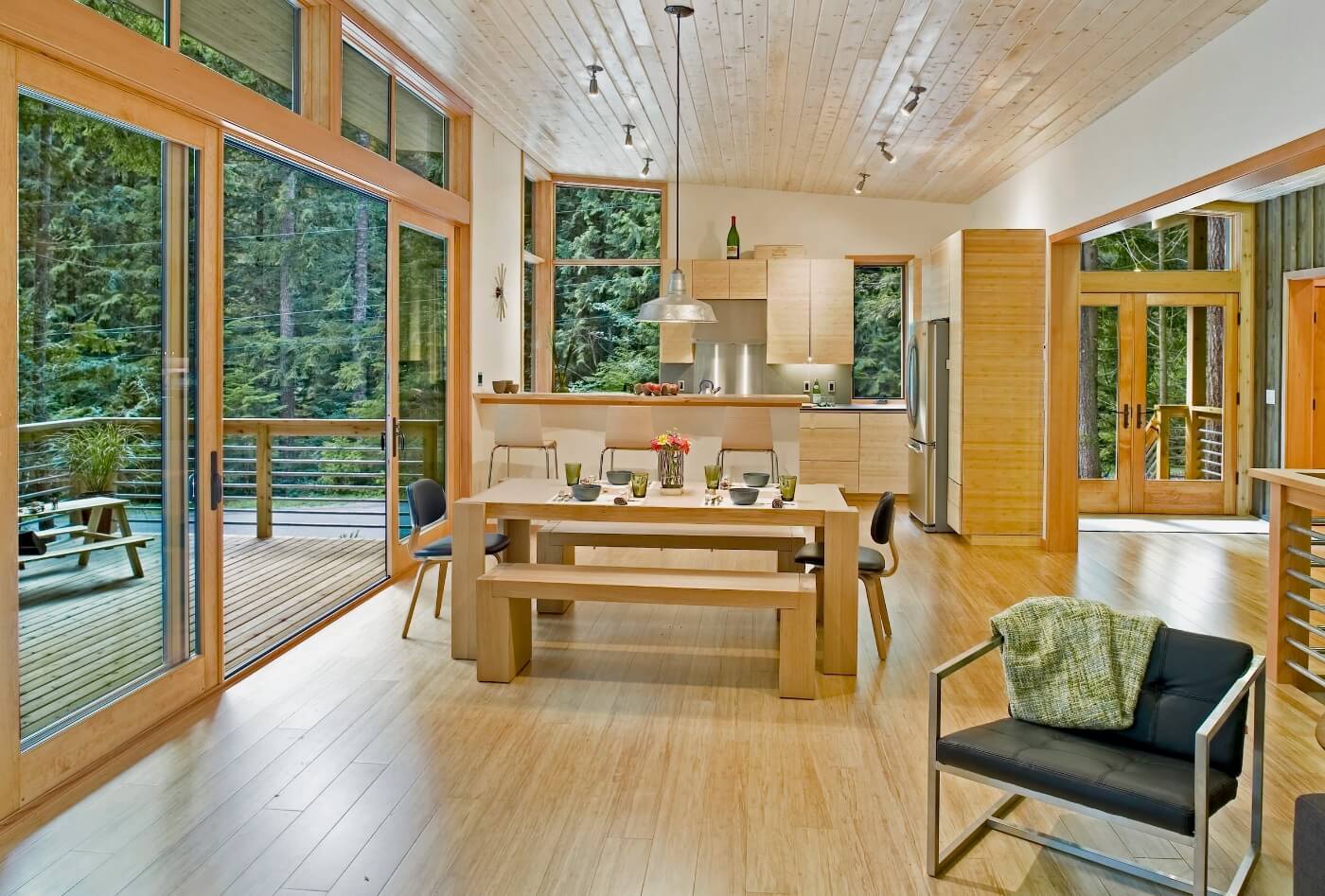
Most people only see bamboo at the end of its journey.
A finished floor. A wall panel. A sleek staircase in a modern home that somehow never has fingerprints on it.
What rarely gets discussed is everything that happens before bamboo becomes a finished product. Harvest timing, drying methods, preservation chemistry, adhesives, and industrial processing all shape how durable, sustainable, and safe the final material actually is.
That’s also why bamboo products can vary so much in quality. Therefore, understanding the bamboo life cycle explains why good bamboo performs so differently from cheap alternatives.
Bamboo Is Fast Growing, But Timing Still Matters
One reason bamboo became popular globally is speed. Unlike hardwood trees that may take decades to mature, many bamboo species become usable within:
- 4 to 5 years
That growth speed makes bamboo one of the most renewable construction materials available.
Still, faster growth does not mean manufacturers can harvest bamboo whenever they want.
Timing changes everything.
Young Bamboo Is Too Weak for Structural Use
Immature bamboo contains:
- high moisture
- high starch
- soft fibers
- incomplete lignification
In simple terms, it’s too unstable for demanding applications.
Young bamboo is usually used for:
- weaving
- baskets
- light crafts
- pulp products
Structural bamboo products require mature culms with fully hardened fiber walls.
Mature Bamboo Is the Sweet Spot
Most industrial bamboo used in flooring, decking, and engineered panels is harvested between:
- 3 and 5 years
At this stage, the bamboo reaches peak density and strength.
The fibers become heavily lignified, moisture content drops, and the material becomes far more stable.
This maturity window is critical.
Harvest too early and the material becomes weak. However, if it’s harvested too late then the fibers become brittle. Good bamboo manufacturing starts long before factory processing begins.
Sustainable Bamboo Harvesting Is More Technical Than People Think
Bamboo harvesting is not simply clear-cutting a grove.
Responsible producers selectively harvest mature culms while preserving younger growth and underground rhizome systems.
This keeps the grove productive year after year.
Bamboo Forests Function More Like Agricultural Systems
Unlike hardwood logging, bamboo harvesting resembles long-term agroforestry management.
Growers often use:
- maturity marking systems
- color-coded harvest cycles
- selective cutting methods
- rotational harvesting
to track which bamboo poles are ready for industrial use.
Some systems even mark bamboo by year using colored bands:
- red
- yellow
- blue
- black
That helps workers avoid harvesting immature culms accidentally.
Harvest Timing Even Changes During the Day
This part surprises most people.
Professional bamboo harvesting is often timed around:
- moisture levels
- starch movement
- seasonal cycles
Bamboo harvested before sunrise contains lower starch concentrations in the culm.
That matters because starch attracts:
- fungi
- termites
- beetles
- biological decay
Rainy season harvesting is also avoided because excessive moisture increases cracking during drying.
This level of detail rarely gets discussed in generic “eco flooring” conversations.
Raw Bamboo Is Naturally Vulnerable
This is one of the biggest misconceptions about bamboo.
People often assume bamboo is naturally resistant to insects and decay because it grows so aggressively.
Actually, untreated bamboo is surprisingly vulnerable. Unlike teak or cedar, bamboo lacks strong natural extractives that repel pests. Its outer skin contains silica protection, but the internal fibers remain highly attractive to:
- termites
- fungi
- powder-post beetles
- moisture damage
That means harvested bamboo must be stabilized before manufacturing.
Otherwise, it deteriorates quickly.
How Bamboo Gets Treated Before Manufacturing
Preservation science plays a massive role in long-term bamboo durability.
Traditional Water Leaching
One of the oldest methods involves soaking bamboo in:
- streams
- water tanks
- mud pits
for weeks or even months.
This slowly removes starches and sugars from the fibers.
Less starch means fewer insect problems later.
Air Drying Takes Months
After treatment, bamboo must dry slowly.
Rushing this stage creates:
- cracking
- warping
- splitting
Proper air drying can take:
- several months
This is one reason quality bamboo products cost more.
Fast production shortcuts usually show up later as durability problems.
Chemical Preservation Is Common in Industrial Bamboo
Modern bamboo products often use boron-based preservatives.
These treatments help prevent:
- fungal decay
- termite damage
- insect infestation
Safer borax and boric acid systems are now preferred over older toxic chemical treatments.
This shift matters for both:
- indoor air quality
- environmental safety
At Bamboo Design & Architecture we place significant emphasis on low-emission and environmentally conscious bamboo processing.
The Manufacturing Stage Changes Bamboo Completely
Raw bamboo poles cannot simply become flooring overnight.
The hollow cylindrical structure has to be transformed into stable engineered material.
First, Bamboo Is Split Into Strips
Manufacturers cut the culms into narrow strips and remove:
- the outer silica skin
- the soft inner layer
The remaining strips are flattened and processed into industrial components.
Carbonization Creates Darker Bamboo
To create darker tones, bamboo undergoes a process called carbonization, where the material is treated with high-pressure steam and heat.
This process gives bamboo its rich caramel and coffee-colored appearance, which is why darker bamboo flooring remains so popular in modern interiors.
In traditional horizontal and vertical bamboo flooring, carbonization can slightly soften the material compared to natural bamboo. However, with high-density strand woven bamboo, the difference in performance is much smaller.
Both natural and carbonized strand woven bamboo remain extremely dense, durable, and well-suited for high-traffic areas.
| Stage | What Happens | Purpose |
|---|---|---|
| Harvesting | Mature bamboo culms are selected and harvested | Provides suitable raw material for manufacturing |
| Processing | Bamboo is cut, treated and prepared for production | Improves durability and prepares the material for manufacturing |
| Manufacturing | Strips or strands are assembled, compressed and formed | Creates strong, stable bamboo products |
| Finishing | The finished material is sanded, finished and inspected | Provides the desired appearance and surface protection |
| Final Product | Finished bamboo flooring or panels are packaged and prepared for delivery | Delivers a ready-to-install or ready-to-use product |
Conclusion
Bamboo looks simple once it’s installed.
What most people never see is the years of growth management, drying, preservation, engineering, and testing behind it. A good bamboo product is less “random eco trend” and more carefully engineered material science.
That’s why bamboo can feel wildly different from one product to another. Some are built for decades of heavy use. Others are basically good lighting and marketing.
The interesting part is where bamboo is heading next. Better adhesives, cleaner processing, and stronger engineered systems are turning bamboo into something much bigger than just an alternative to hardwood.

0 Comments