
Most people don’t think twice about what their furniture or panels are made of.
It’s usually just “wood,” and that’s the end of the story. Bamboo plywood breaks that assumption in a quiet but interesting way.
It looks like wood, works like wood, but comes from something that grows more like grass on steroids. The real reason it’s getting attention isn’t just sustainability. It’s the mix of strength, consistency, and how efficiently it’s made.
Once you understand how it’s built, it starts to make a lot more sense. Let’s have a look at why designers and builders are leaning toward it.
What Exactly Is Bamboo Plywood?
Bamboo plywood is an engineered board made by compressing bamboo into flat panels.
Instead of slicing layers from a tree trunk, manufacturers do it a bit differently. They take bamboo stalks, break them down, and rebuild them into something more controlled.
That “rebuilding” part is key.
Wood comes with natural inconsistencies like knots and uneven density. Bamboo panels are assembled in a way that reduces those weak spots.
A simple way to think about it:
- Wood plywood is extracted
- Bamboo plywood is constructed
That difference is why bamboo boards often feel denser and more uniform when you handle them.
Why Bamboo Isn’t Just “Another Wood”
Calling bamboo wood is technically wrong, and practically misleading. It’s a grass, and its internal structure is very different.
Inside a bamboo stalk, fibers run in long, straight lines. There are no rings, no random grain patterns. There are fibers which are tightly packed, especially near the outer layer. This is where most of the strength comes from.
When those fibers are compressed into panels, you get a material that behaves more predictably. It means:
- It handles stress better
- It bends without failing as easily
- It doesn’t have hidden weak spots
It’s closer to a natural composite than traditional timber.
How It’s Made (Without the Factory Fluff)
Turning a hollow bamboo stalk into a solid panel takes a bit of work.
Harvesting
Bamboo is cut when it’s around 4 to 6 years old. Too young, it’s weak. Too old, it becomes brittle.
Breaking It Down
The stalk is split into strips. The outer skin and inner soft layer are removed because they don’t bond well.
Treating It
Raw bamboo attracts insects because of its natural sugars. Those are removed through boiling or chemical treatment. Sometimes the strips are heated with steam to darken the color and make them more stable.
Drying
Moisture is reduced carefully. If you rush this step then the panel will eventually warp or crack.
Pressing It Together
Strips are glued and compressed under heat. This is where the material becomes dense and solid.
Finishing
The boards are sanded and cut into usable sizes. Nothing fancy, just making it ready for real-world use.
The Different Types (And Why You Should Care)
The way bamboo is arranged changes how it looks and performs.
Horizontal
This one shows off the classic bamboo pattern with visible nodes. It’s more about appearance than heavy-duty performance.
Vertical
Strips are turned sideways, giving a cleaner, more modern look. It also creates a tougher surface.
Strand Woven
This is where bamboo gets serious.It’s broken into fibers and compressed heavily. The result is extremely dense and hard, often used in flooring where durability matters.
Bamboo Mat Board
Bamboo is woven into mats before being pressed. This version handles humidity really well, which makes it useful in tougher environments.
Strength: Where Bamboo Quietly Wins
Bamboo plywood doesn’t try to look strong. It just is.
- Density is higher than most standard plywood
- Bending strength can go up to 120 N/mm²
- Tensile strength reaches around 140 MPa
- Strand woven versions can exceed 4000 on the Janka hardness scale
That last number puts it above many hardwoods.
What you notice in practice:
- Screws grip tightly
- Surfaces resist dents
- Panels don’t sag easily under weight
It’s the kind of material that holds up without needing constant attention.
Moisture and Stability
Anyone who has worked with wood knows it reacts to humidity.
Sometimes subtly, sometimes dramatically.
Bamboo behaves better.
Its dense structure and processing reduce how much it expands or contracts.
Result:
- Less warping over time
- Better performance in humid climates
- More predictable behavior
It’s not immune to moisture, but it’s definitely less temperamental.
The Sustainability Angle (Without the Marketing Spin)
Bamboo grows fast. Like really fast.
It reaches maturity in about 3 to 6 years, compared to decades for most trees. Moreover, it also regrows from its root system, so there’s no need to replant after harvesting.
On top of that:
- It absorbs a significant amount of carbon dioxide
- Harvesting doesn’t destroy the surrounding ecosystem
That combination makes it one of the more practical renewable materials out there.
Moreover, modern production has also improved. Many manufacturers now use low-emission or formaldehyde-free adhesives, which makes indoor use safer.
Where You’ll Actually See It
Bamboo plywood isn’t limited to eco-themed projects.
It shows up in:
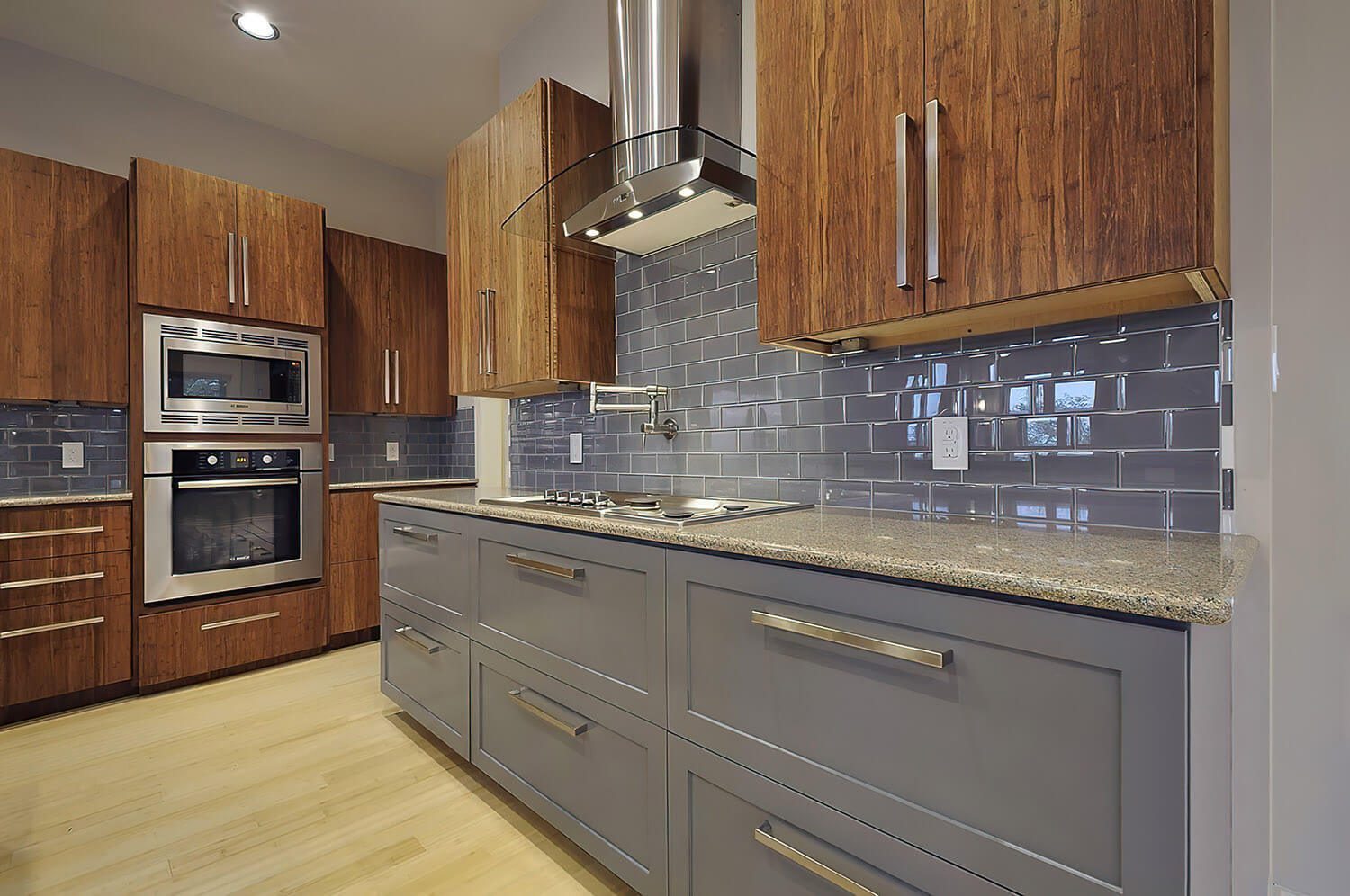
- Cabinets and furniture
- Flooring
- Wall panels
- Countertops
- Structural panels in construction
It has even been used in large commercial spaces where durability is non-negotiable. So it’s not just a niche choice anymore.
Working With It (A Quick Reality Check)
Bamboo is tougher than it looks.
That’s good for durability, not always great for handling.
Things that matter:
- Always pre-drill before inserting screws
- Use proper cutting tools (cheap blades won’t last)
- Seal all surfaces properly
- Let the material adjust to the environment before installing
Treat it casually and it will push back.
Cost vs What You Get
Bamboo plywood is usually more expensive than standard plywood. It often sits below premium hardwoods. That makes it a middle-ground option.
You pay more upfront, but you get:
- Longer lifespan
- Better strength
- A finished look without extra work
In many cases, it ends up being worth it over time.
Conclusion
So, why does it matter anyways? Because it solves two problems at once.
You get a material that performs well and doesn’t take decades to grow. Now that’s a rare combination.
Bamboo plywood isn’t perfect, and it’s not always the right choice. It just happens to be one of the few materials where sustainability and performance actually meet in the middle. That too without compromise!

0 Comments