
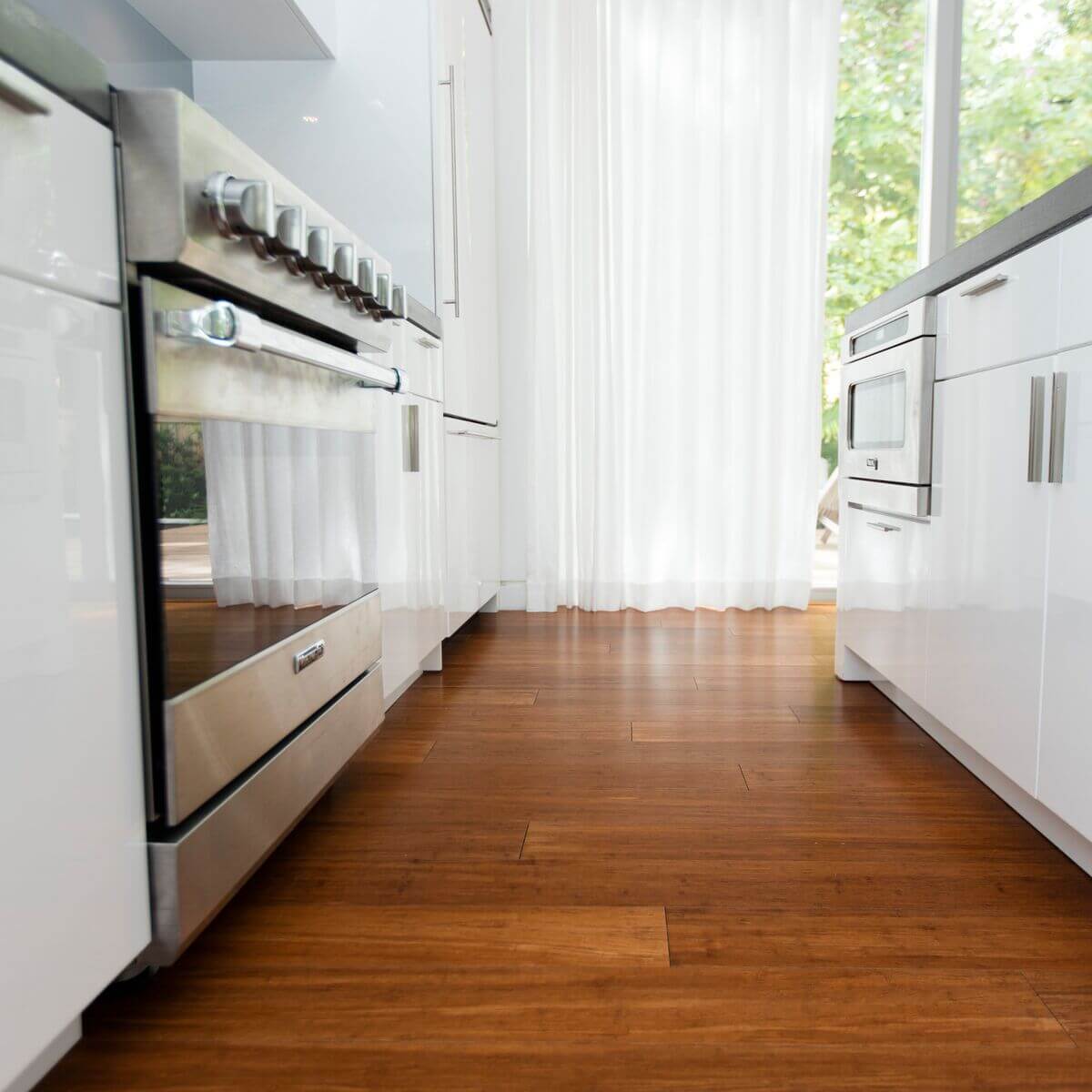
Bamboo flooring in 2026 has had a bit of a glow-up. It’s no longer the “eco-friendly backup option” people picked when they couldn’t afford hardwood. Now? It’s competing head-to-head, and in some cases, winning.
The market is sitting around $1.5 billion and growing steadily, but the real story isn’t the numbers. It’s the shift in mindset. People want flooring that looks good, lasts long, and doesn’t make them feel guilty about the planet.
Fortunately, bamboo checks all three boxes without trying too hard!
Goodbye Grey, Hello Warmth
Remember when every house looked like a Pinterest board dipped in grey? Yeah, that era is fading.
2026 is all about warmth. Spaces feel softer, more natural, and honestly… more human. Bamboo fits right in because it already has those earthy tones built in.
You’ll mostly see:
- Light honey shades for bright, airy rooms
- Caramel and mocha tones for everyday warmth
- Dark espresso finishes for a bit of drama
It’s all part of this bigger idea of bringing nature indoors. Not in a jungle way, just enough to make your space feel calm instead of clinical.
Matte Is the New Cool
Glossy floors had their moment. Now they just feel… loud.
Matte and satin finishes are taking over, and once you notice it, you can’t unsee it. They don’t reflect light harshly, they hide dust better, and they just look more natural.
There’s also more texture now, which is a fancy way of saying floors aren’t perfectly smooth anymore.
Think:
- Slightly rough, brushed surfaces
- Subtle grain you can actually feel
- Finishes that look a bit “imperfect” in a good way
It’s less showroom, more real life.
Bigger Planks, Less Visual Chaos
Wide planks are everywhere in 2026, and for good reason. They make rooms feel bigger without knocking down a single wall.
Fewer seams = cleaner look.
However, here’s where it gets interesting. People aren’t just laying floors straight anymore. Patterns are making a comeback, and they’re doing it confidently.
You’ll see:
- Herringbone layouts that add movement
- Chevron patterns for a sharper, modern edge
Some homes even mix patterns across spaces. It sounds chaotic, but when done right, it actually makes everything feel more intentional.
Bamboo Got Stronger (Like, A Lot)
If you still think bamboo is “soft,” you’re about a decade behind.
Strand-woven bamboo is the real deal now. It’s made by compressing bamboo fibers under insane pressure, which turns it into something ridiculously dense.
Here’s what that means:
- Up to 2–4× harder than oak
- Handles heavy furniture without complaining
- Survives busy homes, pets, and general chaos
Some brands even call it “fossilized bamboo,” which sounds dramatic… but not entirely wrong.
Engineered Bamboo = Less Drama with Moisture
Older bamboo had one annoying flaw. It didn’t love moisture.
Engineered bamboo fixes that by layering the material in different directions, making it way more stable. So now you can use it in places that used to be risky:
- Kitchens
- Basements
- Even over concrete
It also works with underfloor heating, which used to be a hard no.
Basically, it behaves itself now.
| 2026 Trend | What It Looks Like | Why It Matters |
|---|---|---|
| Warm Tones | Honey, caramel, mocha and espresso shades | Creates a warmer, more natural interior |
| Matte & Textured Finishes | Brushed surfaces and subtle visible grain | Provides a more natural look and helps hide dust |
| Wide Planks & Patterns | Wider boards, herringbone and chevron layouts | Creates a cleaner, more spacious visual effect |
| Strand-Woven Bamboo | Dense, highly compressed bamboo construction | Designed for greater hardness and heavy everyday use |
| Engineered Bamboo | Layered construction for greater dimensional stability | Better suited to moisture-prone areas and concrete subfloors |
Sustainability: Still Important, Just Less of a Flex
Bamboo is still one of the most eco-friendly flooring options out there, but in 2026, that’s expected. Not impressive. Just expected.
Quick reality check:
- Grows in 3–7 years (hardwood takes decades)
- Absorbs a lot of CO₂
- Regrows without replanting
What’s new is how it’s processed.
You’ll now see:
- Low-toxicity adhesives
- Cleaner manufacturing processes
- Certifications becoming the norm, not the exception
Some brands are even hitting carbon-negative production, which is basically overachieving.
Built to Not-Just-Look-Good-for-2-Years
Here’s where bamboo quietly wins.
It’s not just about how it looks on day one. It’s about how it holds up over time.
- Lifespan: 30–50 years
- Can be refinished instead of replaced
- Resistant coatings handle daily wear
It’s not maintenance-free, but it’s not high-maintenance either. Just treat it like you care a little.
Not Just for Homes Anymore
Bamboo is showing up in more commercial spaces now, and that says a lot.
You’ll find it in:
- Offices
- Hotels
- Even healthcare settings
Why? The biggest reason is durability. Modern bamboo, especially strand-woven types, is dense enough to handle heavy foot traffic without wearing out quickly. That makes it practical for busy environments.
Maintenance also plays a role. Commercial spaces need floors that can handle frequent cleaning, and bamboo’s protective finishes help it hold up without losing its appearance.
There’s also a hygiene angle. Bamboo has natural antimicrobial properties, which adds to its appeal in spaces where cleanliness matters.
Finally, there’s design. Businesses are moving away from cold, sterile interiors. Bamboo brings warmth while still looking professional. Add sustainability into the mix, fast growth, renewability, and lower environmental impact, and it becomes an easy choice.
It’s not just about looks anymore. Bamboo works hard, and it shows.
So… Is Bamboo Worth It in 2026?
Short answer: yes, and it’s not even close to what it used to be. The longer answer is that bamboo has finally figured itself out.
It looks better, performs better, and is much easier to live with than earlier versions. On top of that, it doesn’t carry the same environmental baggage as traditional materials.
At this point, people aren’t choosing bamboo as a backup option or alternative. They’re choosing it because it simply makes more sense.V
Explore our Solid Densified™ Bamboo Floors collection for durable, modern flooring options that bring together performance, distinctive finishes, and sustainable design.

0 Comments