
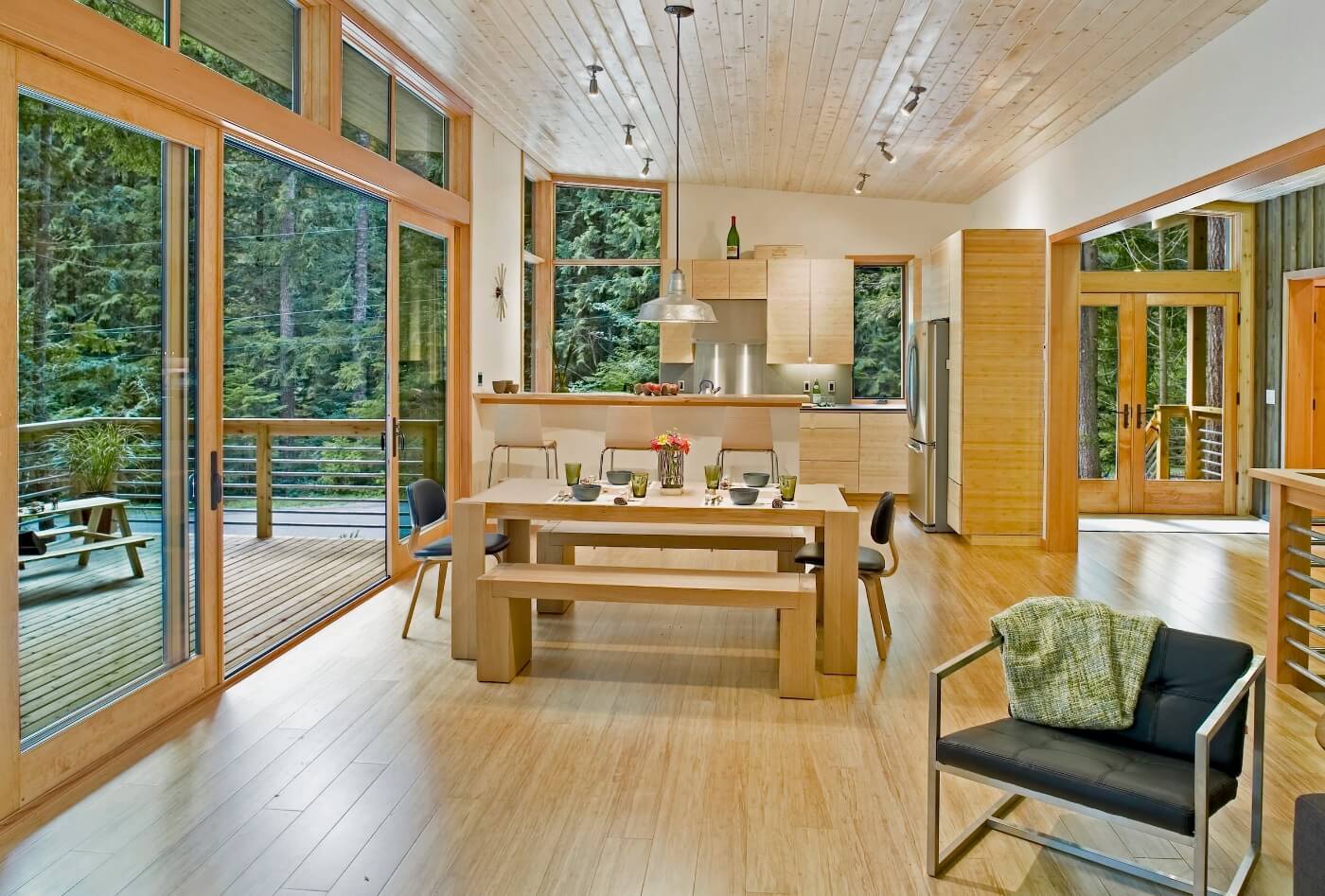
Radiant heating feels different the moment you walk into a room. Instead of warm air blowing around, the heat comes up gently from the floor. It is quieter, more even, and honestly just more comfortable.
That shift makes your flooring choice more important than most people realise. The floor is no longer just something you walk on. It becomes part of the heating system itself.
Bamboo fits into this setup surprisingly well. It handles heat, stays stable, and helps the system run more efficiently over time. Let’s take a closer look!
Where Your Floor Fits Into the Heating System
Radiant heating works from the ground up. Heat is generated below the surface and travels through the flooring into the room.
You feel it as:
- Warm floors underfoot
- Even heat across the space
- No sudden blasts of hot or cold air
The flooring layer plays a direct role here. If it blocks heat, the system struggles. If it lets heat move freely, everything works better.
Why This Layer Matters More Than You Think
Think of the floor as the final step in delivering warmth. It needs to:
- Let heat pass through easily
- Stay stable as temperatures change
- Hold its shape over time
Bamboo checks those boxes, which is why it works so well in this setup.
Bamboo In Heated Homes? A Big Yes!
Bamboo tends to behave calmly under heat. It does not overreact to temperature changes, and that is a big deal in radiant systems.
It comes down to how it is built.
What Makes Bamboo Reliable
- Dense fiber structure
- Less sensitivity to heat changes
- Strong overall stability
That combination helps bamboo stay consistent even with daily heating cycles.
Engineered Bamboo Takes It Further
If you go with engineered bamboo, you get added stability.
- Layers work together to reduce movement
- Helps prevent warping or shifting
- Handles long-term heating better
In most homes, this is the safer and more reliable option.
The Heat Has to Travel Somewhere
Here is something most people do not think about.
Heat does not magically appear in the room. It has to move through the floor first. Some materials slow that down. Bamboo helps it along.
Compared to many hardwoods, bamboo allows heat to pass through more easily.
What That Feels Like In Real Life
- Rooms warm up quicker
- Heat spreads more evenly
- The system does not have to work as hard
It is one of those subtle differences you start to notice after a few cold mornings.
Real Homes Are Not Perfect: Heat Meets Dry Air
Radiant heating is great, but it does come with one side effect. It can dry out the air. That is where many floors start to struggle. They shrink, shift, or develop gaps.
However, bamboo handles this better than most.
How Bamboo Responds To Changing Conditions
- Moves less when humidity drops
- Adjusts gradually instead of suddenly
- Keeps a more even surface
Moreover, the layered design of engineered bamboo adds another level of control. It keeps the floor from reacting too strongly to changes in the environment. That means fewer surprises over time!
Not All Bamboo Floors Are Same, Right?
This part matters more than people expect. Different types of bamboo behave differently under heat.
Engineered Bamboo (More Forgiving in Changing Conditions)
Engineered bamboo is known for its stability, especially in homes where indoor conditions are not perfectly controlled.
- Built with multiple layers
- Designed to reduce expansion and contraction
- Handles fluctuations in temperature and humidity more easily
This makes it a great option for homeowners who want extra peace of mind. Especially in environments where humidity levels may vary throughout the year.
In other words, it is not automatically “better” than solid bamboo. It is simply more forgiving when conditions are less consistent.
Strand-Woven Bamboo (Where Strength Really Shows)
Strand-woven bamboo is all about performance. This is where bamboo moves beyond “natural material” and starts behaving more like a high-performance surface.
It is made by compressing bamboo fibers under intense pressure, which creates an extremely dense structure. That density is what gives it its strength.
- Highly resistant to dents and surface damage
- Handles heavy foot traffic with ease
- Performs well under consistent heat exposure
In real-world use, this means the floor holds its appearance much longer, even in busy areas.
Strand-woven bamboo can be found in both engineered and solid formats. So it is less about choosing one over the other, and more about choosing the level of durability you want!
Solid Bamboo (Reliable When Done Right)
Solid bamboo deserves a more accurate explanation here. It performs very well over radiant heating systems when:
- Installation is done correctly
- Temperature is introduced gradually
- Indoor humidity and climate are kept within recommended ranges
In properly managed homes, solid bamboo is not a risk. It is a proven option with decades of successful use in real-world installations.
The only difference is that it is slightly less forgiving than engineered bamboo. That too if conditions are not controlled. However, this doesn’t make it weaker. It simply means it relies more on a stable indoor environment.
| Bamboo Flooring Type | Stability | Key Strength | Best Consideration |
|---|---|---|---|
| Engineered Bamboo | High stability with changing temperature and humidity | Layered construction reduces movement | Good choice when indoor conditions vary |
| Strand-Woven Bamboo | Strong performance under consistent heat exposure | Extremely dense and resistant to dents and wear | Well suited to high-traffic spaces |
| Solid Bamboo | Reliable when temperature and humidity are controlled | Durable and proven for radiant heating when properly installed | Requires careful installation and climate management |
Installation Is Where Things Can Go Wrong
Even the best material can fail if the setup is rushed. Radiant heating and flooring need to be treated as one system, not two separate parts.
What Needs To Be Done Properly
- Subfloor must be dry and level
- Bamboo needs time to adjust to the room
- Heat should be introduced slowly
- Indoor conditions must stay controlled
Common Ways To Install Bamboo
How the floor is installed matters just as much as the material itself, especially with radiant heating underneath.
Floating Floors (Most Flexible And Common)
The planks lock together and sit above the subfloor rather than being fixed to it. This allows the floor to expand and contract more freely with temperature changes. Which makes it a safe and practical option for many homes.
However, the underlayment layer can slightly reduce heat transfer efficiency.
Glue-Down Installation (Best For Performance)
The flooring is bonded directly to the subfloor using a heat-rated adhesive.This creates full contact with the surface, allowing heat to transfer more efficiently into the room.
It also limits movement and provides a more solid feel underfoot, which is why many professionals prefer this method for radiant systems.
Nail-Down Installation (Limited Use)
This method involves fastening the flooring into the subfloor. IIn radiant heating setups, especially those with pipes or cables beneath, there is a risk of damaging the system. For that reason, nail-down installation is generally avoided unless a specialised sleeper system is used.
Two Types of Radiant Heating, Two Slightly Different Experiences
Bamboo works with both main types of radiant heating, though they behave a bit differently.
Hydronic Systems
These use warm water flowing through pipes.
- Heat builds slowly
- Feels steady and consistent
- Easier on the flooring
This setup pairs very naturally with bamboo.
Electric Systems
These use heating cables or mats.
- Heat comes up faster
- Good for smaller spaces
They still work well, though they need careful setup to avoid uneven heating.
The Real Thing to Watch: Humidity
Heat is not usually the problem. Dry air is. Radiant systems can lower indoor humidity, especially in winter. That is when floors start to react. Here are a few ways you can keep things stable:
- Aim for 35% to 55% humidity
- Use a humidifier if needed
- Keep an eye on indoor conditions
Balanced air makes a big difference. It keeps the floor stable and prevents issues before they start.
What It Is Like Living With Bamboo Floors
Day to day, bamboo flooring is easy to live with.
It holds up well, even in busy homes. The surface stays cleaner-looking because it resists dents and wear.
Simple Maintenance
- Sweep or vacuum regularly
- Use a lightly damp mop when needed
Too much water is not a good idea, especially with heat involved.
Furthermore, in the long run, bamboo can be refinished when needed. However, because it resists damage well, that need often comes up less frequently.
That is one of those benefits you only appreciate years later!
Conclusion
Bamboo flooring does more than just sit on top of a radiant system. It works with it.
It lets heat move efficiently, and stays stable through changing conditions. Moreover, it also holds up well over time. The result is a floor that feels comfortable and performs reliably.
Simply put, with bamboo it does not feel like a compromise. It feels like a natural fit.
Explore our Solid Densified™ Bamboo Floors for a durable flooring solution that can complement radiant heating systems when properly selected and installed.

0 Comments