
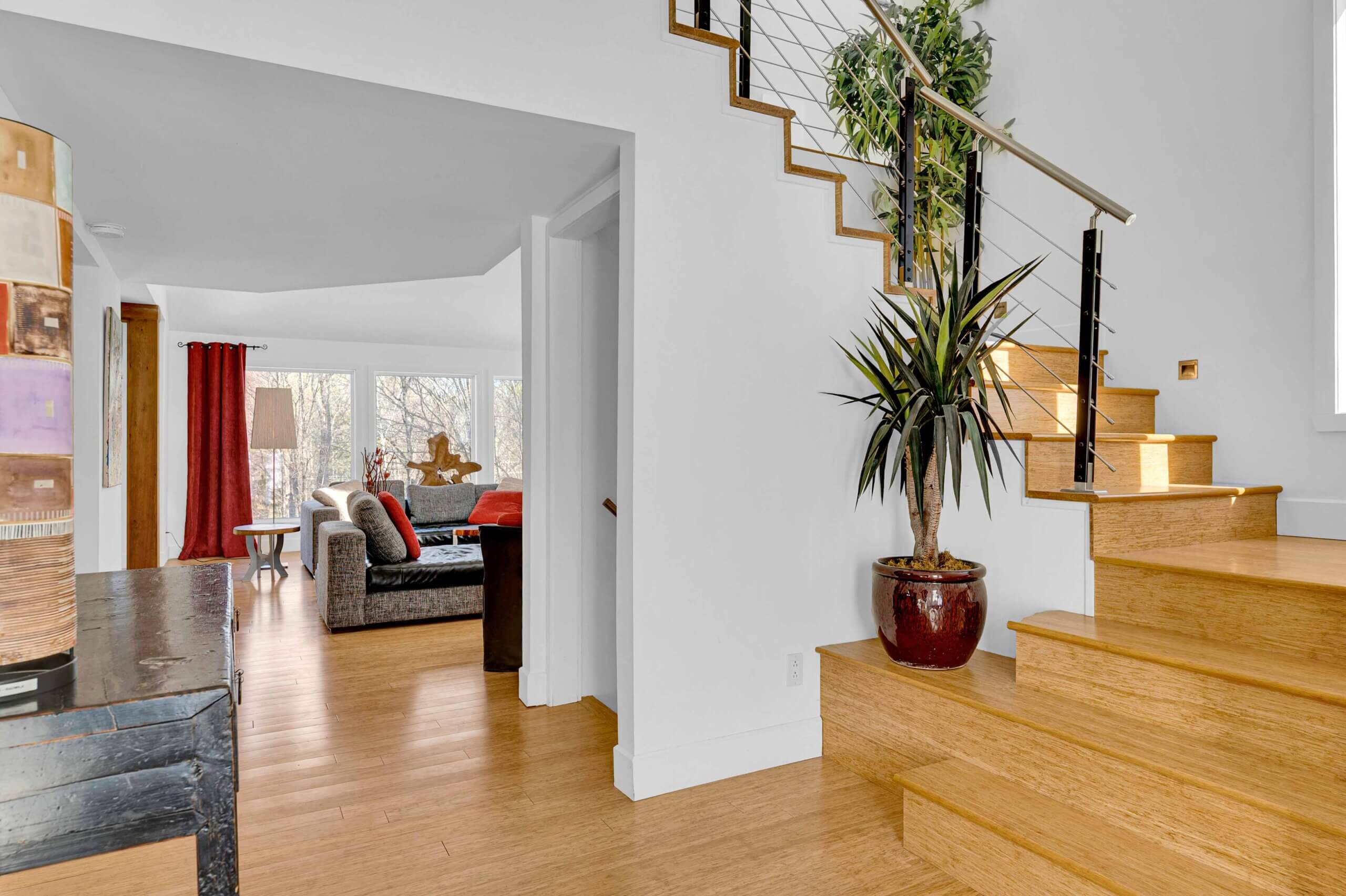
Your floor does more than just sit there. It quietly sets the tone of the entire room before anyone even notices your furniture.
Bamboo flooring, in particular, is incredibly versatile. It can feel calm and minimal, raw and industrial, or soft and coastal depending on how you use it.
That’s what makes it such a smart choice. You are not locked into one aesthetic. You just need to match the right bamboo style to the look you want.
Let’s walk through how to actually do that!
Start Here: Know Your Bamboo
The structure you choose shapes everything that follows.
Before thinking about colours or decor, it helps to understand what bamboo really is.
It is not hardwood. It is a fast-growing grass that matures in just 5 to 7 years, making it far more renewable than traditional options like oak or walnut.
More importantly, bamboo flooring comes in three main constructions, and each one has a distinct personality:
- Horizontal bamboo shows the natural nodes and growth patterns. It feels warm, organic, and slightly textured.
- Vertical bamboo has a clean, linear grain with a uniform look. It feels calm and modern.
- Strand-woven bamboo is made by compressing fibres under pressure. It is denser, more durable, and often has a more dramatic, marbled appearance.
This choice is not just technical. It directly affects how your space feels. A minimalist room with horizontal bamboo will feel completely different from one with vertical planks, even in the same colour.
Once you have this foundation right, everything else becomes easier.
| Decor Style | Bamboo Style | Recommended Tone | Finish / Pattern |
|---|---|---|---|
| Scandinavian / Japandi | Vertical bamboo | Light blonde or natural | Simple, subtle grain |
| Modern Minimalist | Strand-woven bamboo | Grey, stone or espresso | Wide planks |
| Rustic / Farmhouse | Horizontal bamboo | Caramel, chestnut or walnut | Hand-scraped or distressed |
| Industrial / Loft | Dark strand-woven bamboo | Dark, carbonised tones | Distressed or matte |
| Coastal / Hamptons | Light bamboo | Sandy, blonde or natural | Matte or low-sheen |
Scandinavian & Japandi: Light, Calm, Effortless
Think airy spaces where nothing feels extra.
If you like bright, uncluttered interiors, this is your lane.
Scandinavian design leans heavily on light and simplicity. Japandi builds on that with a softer, more intentional feel rooted in balance and imperfection.
For both styles, vertical bamboo in a light blonde or natural finish works best. The subtle grain does not compete with furniture, and the lighter tone reflects natural light, which instantly makes a space feel bigger and calmer.
Keep the palette muted. Warm whites, soft greys, sage greens. Add texture through materials like linen, wool, and light wood rather than bold colours.
The key idea here is restraint. The floor supports the room quietly while everything else stays intentional and uncluttered.
Modern Minimalism: Clean and Intentional
Every element has a purpose, including the floor.
Minimalism often gets mistaken for emptiness, but that is not the goal. The goal is clarity.
In this setting, strand-woven bamboo in grey, stone, or deep espresso tones works beautifully. It adds just enough visual interest through its subtle marbling without making the space feel busy.
Wide planks are a strong choice here. They reduce visual breaks and create a smoother, more continuous surface, which is especially effective in open-plan layouts.
Pair your flooring with materials like glass, chrome, and stainless steel. Keep the colour palette tight and consistent.
The result should feel sharp and deliberate. Nothing random, nothing excessive. The floor blends in, but in a way that elevates everything around it.
Rustic & Farmhouse: Warm and Imperfect
This is where character matters more than polish.
Rustic interiors celebrate materials that look real and slightly imperfect. You are not aiming for sleekness. You are aiming for lived-in.
Horizontal bamboo is the natural fit here. Because it highlights the nodes and organic texture of the plant. You can actually see where it came from, which adds authenticity.
Take it a step further with a hand-scraped or distressed finish in warm tones like caramel, chestnut, or walnut. This gives the floor a softened, aged look that feels welcoming rather than pristine.
Layer in elements like distressed leather, exposed beams, brick walls, and matte black hardware. These details work together to create depth.
This style is not about perfection. It is about comfort and character, and the flooring plays a big role in setting that tone.
Industrial & Loft: Dark with an Edge
Bold, raw, and a little gritty.
Industrial spaces thrive on contrast. Rough textures meet clean lines. Old materials sit next to modern ones.
For this look, dark carbonised strand-woven bamboo is a strong choice. The deep tones create a striking base that works well with concrete, exposed brick, and metal accents.
A distressed or matte finish adds to the effect. It makes the floor feel like it has a story rather than looking brand new. This type of bamboo is also extremely durable, which makes it ideal for large, open spaces that see a lot of movement.
To complete the look, bring in industrial lighting, metal shelving, and reclaimed wood elements. The floor should feel bold, but still grounded.
Coastal & Hamptons: Soft and Breezy
Relaxed spaces that feel like a deep breath.
Coastal interiors are all about ease. Nothing should feel heavy or overly styled.
Light bamboo in sandy, blonde, or natural tones fits perfectly here. A matte or low-sheen finish helps keep things looking relaxed rather than polished.
The goal is to mimic the softness of driftwood and sun-washed surfaces.
Pair your flooring with light fabrics like linen and cotton, along with natural materials like rattan and wicker. Keep colours soft and airy, think whites, pale blues, and sea greens.
Natural light plays a big role in this style, so the flooring should help reflect and enhance it.
Everything should feel open, calm, and easy to live in.
Boho & Maximalist: Bold but Grounded
Lots going on, but still somehow put-together.
Bohemian and maximalist spaces are full of personality. Colours, textures, patterns, everything comes together in layers.
That is exactly why the floor needs to be grounded!
Tiger bamboo is a great option because of its natural contrast. The alternating light and dark streaks add character without overwhelming the room. If you want to go further, stained bamboo works well in deeper tones. This includes shades like teal, forest green, or navy that can turn the floor into a feature element.
The key is balance. Pair bold flooring with rich textiles, layered rugs, mixed metals, and plenty of plants. However, avoid stacking too many competing patterns.
Even in maximalist spaces, the floor should anchor the design, not fight it.
Mid-Century Modern: Warm and Balanced
It’s all about clean lines with a touch of nostalgia. Mid-century modern design has a timeless appeal because it balances simplicity with warmth.
Carbonised bamboo in amber or mocha tones works beautifully here. The warmth echoes classic materials like walnut and teak, which are staples of this style.
Furniture tends to have clean lines and tapered legs, so the flooring should complement rather than distract.
Accent colours like mustard, rust, and olive help tie the look together, while brass fixtures add a subtle touch of polish.
The overall feel should be cohesive and inviting. Nothing too cold, nothing too busy.
Art Deco: Dramatic and Polished
When subtle just is not the goal.
Art Deco is about making a statement. Strong geometry, rich colours, and a sense of luxury define the style.
Dark bamboo installed in chevron or herringbone patterns instantly creates visual impact. The pattern itself adds movement and structure to the room.
Chevron, in particular, draws the eye and can make a space feel longer or more dynamic.
Pair this flooring with bold elements like velvet upholstery, mirrored surfaces, and gold accents. Deep jewel tones like emerald, sapphire, and burgundy complete the look.
This is not a subtle style, and the flooring should reflect that confidence!
Conclusion
Bamboo is a bit of a shapeshifter. Dress it light, it feels airy. Go dark, it gets moody. Change the grain, and suddenly the whole room has a different personality.
So don’t treat it like a background decision.
Get the floor right, and everything else starts behaving! The furniture makes sense, colours click, and the room just works.
Funny how the thing you walk all over ends up running the show.
Bring your design vision to life with our Solid Densified™ Bamboo Floors, available in distinctive tones and styles to complement a range of interior décors.

0 Comments