
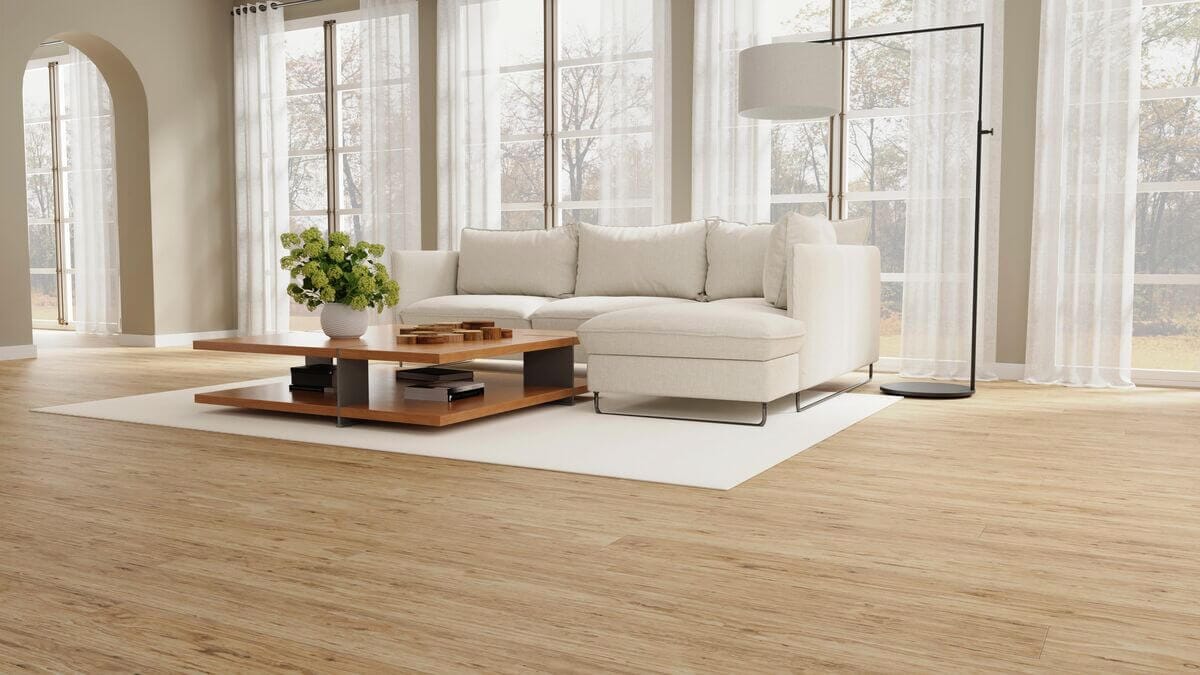
Bamboo and oak flooring are often compared as if one clearly wins. However, that comparison has shifted. Now, modern strand-woven bamboo now matches oak in lifespan and pricing, while moving ahead in durability and sustainability.
The real difference shows up in daily use. Think dents, wear, maintenance, and long-term appearance. Once those factors come into focus, the choice becomes less about tradition and more about performance.
Durability: Where Bamboo Has a Clear Edge
Hardness And Everyday Wear
Strand-woven bamboo typically ranges from 3000 to 4000 on the Janka scale. Oak sits around 1300 to 1360. That difference is substantial and easy to notice over time.
In a busy home, floors take constant impact. Chairs drag, furniture shifts, and pets move freely. Bamboo handles this pressure better. Its surface resists dents and keeps a more uniform appearance.
Oak performs well, though it is softer in comparison. Over time, small dents and marks tend to appear, especially in high-traffic areas.
How Durability Plays Out Over Time
Durability is not just about strength. It is about how a floor ages visually. Bamboo’s density helps it maintain a smoother surface for longer. So, it does not just perform well. It actively reduces visible wear over time, which is where most flooring materials begin to fall short.
Lifespan and Longevity: A Level Playing Field
Expected Lifespan
Both bamboo and oak flooring offer a lifespan of 25 to 50 years or more. Given that they’re installed and maintained correctly. There is no meaningful difference here.
What Actually Affects Longevity
The lifespan of a floor depends on several factors:
- Installation quality
- Subfloor condition
- Indoor humidity levels
- Daily usage
Even the best material will underperform if these are ignored.
Practical Takeaway
Modern bamboo flooring is not a short-term option. It performs just as reliably as oak over the long run when properly installed.
Cost Comparison: Now Comparable Across the Board
Pricing Today
Bamboo and oak flooring now sit in very similar price ranges for comparable quality products.
What Drives Total Cost
Material cost is only one part of the equation. The final price is influenced more by:
- Installation method
- Floor construction type
- Subfloor preparation
- Project complexity
What This Means For Buyers
Choosing between bamboo and oak is no longer about saving money. It is about selecting the material that performs best for your needs.
Style and Appearance: Clean Lines vs Natural Grain
Bamboo Look
Bamboo offers a clean, structured appearance. Its grain is subtle, and the surface looks more uniform. This makes it a natural fit for modern and minimalist interiors.
Oak Look
Oak has a more pronounced grain. It brings visual texture, which works well in traditional and transitional spaces.
Design Perspective
The choice here is personal. Bamboo leans toward a contemporary aesthetic. Whereas, oak aligns with classic design preferences. Both can look excellent when paired with the right interior style.
Maintenance and Refinishing: A Common Misunderstanding
Can Bamboo Be Refinished?
Yes, bamboo flooring can be sanded and refinished using standard professional methods, just like oak.
The confusion comes from its density. Bamboo is harder, which means it requires skilled handling during sanding. It is not difficult for professionals, though it is less forgiving for inexperienced work.
Why Bamboo Often Needs Less Refinishing
Refinishing is usually done to fix visible damage. Bamboo’s hardness reduces the likelihood of deep dents.
Oak, being softer, tends to show wear sooner. This often leads to refinishing earlier in its lifespan.
Practical Insight
Refinishing is typically driven by damage. However, strand-woven bamboo resists that damage so effectively, many homeowners may never need to refinish it at all.
Maintenance and Repairs: What Happens Over Time
Wear Patterns
Bamboo maintains a smoother surface over time due to its resistance to impact. This helps preserve a consistent look across the floor.
Oak develops visible wear more quickly. Some homeowners appreciate this natural aging, while others prefer a cleaner finish.
Repair Options
Both materials can be repaired in similar ways. Sanding, refinishing, and board replacement are all possible.
The difference lies in how often repairs are needed. Bamboo’s hardness reduces the frequency of significant damage.
Sustainability: A Strong Advantage for Bamboo
Renewability
Bamboo grows rapidly and can be harvested every 5 to 7 years. It regenerates from the same root system, which reduces environmental impact.
Oak trees take much longer to mature, often 40 to 80 years. Harvesting removes the tree, making the process slower and less efficient.
Material Efficiency
Bamboo produces more usable material over the same period. This makes it a highly renewable flooring option.
Why This Matters
For environmentally conscious homeowners, bamboo offers a clear advantage in resource efficiency.
Carbon and Environmental Impact
Carbon Absorption
Bamboo absorbs approximately 10 to 30 tonnes of carbon dioxide per hectare per year. Typical forests, including oak, absorb around 3 to 15 tonnes.
This higher rate of carbon capture, combined with faster growth, strengthens bamboo’s environmental profile.
Looking Beyond Origin
It is often assumed that bamboo has a higher footprint because it is imported. The reality is more complex.
Bamboo flooring can achieve a very low, and sometimes net-negative, carbon footprint over its lifecycle. Its rapid growth and high yield help offset transport emissions.
Oak is not always locally sourced. Many oak products are processed overseas, sometimes involving multiple shipping stages.
Practical Takeaway
Environmental impact depends on the full lifecycle of the product. When evaluated this way, bamboo often comes out ahead.
Best Use Cases: Where Bamboo Stands Out
When Bamboo Makes More Sense
Bamboo is a strong choice for homes that experience heavy use. High foot traffic, pets, and frequent movement of furniture all benefit from a harder surface.
It also appeals to homeowners who value sustainability and prefer a clean, modern look.
When Oak May Be Preferred
Oak works well in spaces where traditional aesthetics are important. Its natural grain and warmth continue to suit classic interiors.
Is Bamboo Better Than Oak Flooring?
Well, yes. Bamboo has evolved into a material that matches oak in lifespan and cost while outperforming it in several practical areas. Its hardness provides better resistance to dents, and its environmental profile is stronger due to rapid renewability and higher carbon absorption.
While oak remains a traditional choice, bamboo represents a more advanced flooring solution for modern homes!

0 Comments