
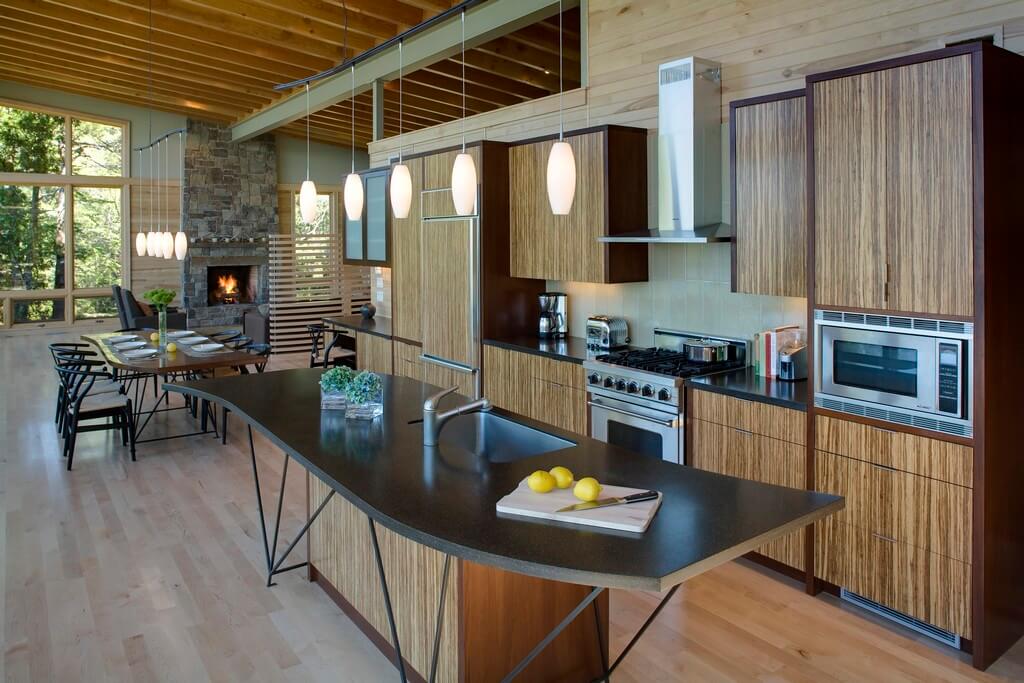
Picking cabinet material used to be simple. You’d choose between oak, maple, or cherry, and that was pretty much the end of the conversation. Today, things look a little different. Bamboo has gone from being an alternative worth considering to a material that genuinely competes with traditional hardwood.
It’s impressively strong, naturally beautiful, and far more sustainable than many conventional options. The question isn’t really *whether* bamboo deserves a place in your kitchen anymore. It’s *which type* of bamboo you should choose, because that’s where the real decisions begin.
Why Bamboo Even Belongs in This Conversation
Start with the sustainability math, because it’s genuinely hard to argue with. A hardwood tree needs decades before it’s ready to harvest.
Bamboo is ready in three to five years, and it regrows from its own root system without replanting. It’s technically a grass, not a tree, which is exactly why it can keep up with demand in a way slow-growing hardwoods never will.
That alone would make bamboo interesting. What makes it a serious cabinet material is that it doesn’t ask you to trade durability for that eco-friendly story.
Done right, bamboo cabinetry holds up to daily kitchen life just as well as the hardwoods it’s replacing, which is the whole reason it’s earned a permanent seat at the table instead of staying a niche alternative.
Vertical, Horizontal, or Strand: Know What You’re Looking At
Bamboo cabinet material comes in three main personalities, and the difference comes down to how the raw bamboo gets processed.
| Bamboo Type | Best Kitchen Cabinet Use |
|---|---|
| Vertical Grain | Cabinet boxes, doors and shelving where stability and a clean look matter. |
| Horizontal Grain | Feature doors and decorative areas where visible bamboo nodes add character. |
| Strand-Woven | High-wear doors and drawer fronts that need extra hardness and durability. |
Vertical grain is made by standing thin bamboo strips on edge before pressing them together. It’s tight, straight, and clean-looking, with barely a visible node; and this is the closest bamboo gets to a minimalist hardwood look. It’s the default choice for most cabinet boxes and doors.
Horizontal grain flips that process, laying the strips flat instead. That puts the bamboo’s natural growth nodes on full display, giving you a warmer, more textured look. It’s a style call more than a performance one. The wide, visible knuckles just aren’t everyone’s taste for a full kitchen, but they’re striking on the right feature piece.
Strand-woven bamboo skips lamination altogether. Instead, raw bamboo gets shredded into fiber bundles, coated in resin, and compressed under serious pressure into a dense, marbled composite. This is the toughest of the three by a wide margin, and it comes with real weight and cost trade-offs that make it best suited for high-wear spots rather than an entire cabinet run.
How Hard Is Bamboo, Actually?
Natural vertical or horizontal bamboo tends to fall in a similar range to oak, right around the same ballpark or slightly above it, depending on the manufacturer. Well-tested vertical-grain bamboo lines are commonly rated at roughly 40% harder than oak, and dedicated strand-woven lines go much further, often landing around 160% harder than oak.
That’s not an outlier claim, either strand-woven bamboo consistently tests as one of the hardest flooring and panel materials on the market, often surpassing hickory.
Independently tested cross-laminated bamboo panels land in a similar range too, with some rated at roughly 25% harder than maple, which is already the tougher of the two common hardwood benchmarks.
That figure tracks closely with what’s reported industry-wide for vertical-grain bamboo, once you account for maple sitting higher than oak to begin with. In other words, multiple manufacturers testing independently are landing in the same neighborhood.
Construction Matters as Much as Grain
Grain type affects the look. Construction affects whether the cabinet stays flat and square for the next twenty years.
Cross-laminated construction layers full-length bamboo strips with each layer running a different direction, which keeps the panel from warping as humidity and temperature shift through the seasons. This is the standard for cabinet-grade bamboo, and it’s what you want for anything structural — boxes, doors, shelving, all of it.
Single-ply bamboo skips cross-layering, so the grain runs in one direction the whole way through, more like a solid plank than an engineered panel. It has its place in specialty work, but it’s not built for the stability a kitchen cabinet actually needs. If a supplier can’t tell you their panels are cross-laminated, that’s worth asking about directly.
Natural or Carbonized: A Color Decision First
Bamboo’s color comes down to how much heat it’s exposed to during manufacturing. Natural bamboo goes through minimal heat treatment, keeping its light, golden tone. Carbonized bamboo gets heated further, turning it into deeper caramel or chocolate shades that read a lot like walnut or cherry.
That extra heat does soften the fibers somewhat as carbonization breaks down some of the natural sugars in the cell walls. For most kitchens, that difference is subtle enough that it’s really a style decision more than a durability one.
Go natural for brightness and a touch of extra hardness, or go carbonized for warmth that pairs beautifully with traditional hardwood-adjacent kitchens.
What a Quality Supplier Should Actually Offer
Panels should come sanded smooth on every face, usually to around 180 grit. That saves a lot of finishing work once the cabinets get built.
Moreover, a good warranty is another sign of quality. Look for at least five years of coverage against delamination, that’s the glue between layers failing. Bamboo Design & Architecture, for example, sands every panel to that same 180-grit standard and backs their cross-laminated line with a five-year residential warranty.
That kind of transparency is worth expecting from any supplier you’re considering. And don’t just check the adhesive in the marketing copy. Make sure every panel in the lineup, not just the flagship product, is CARB compliant.
Matching Bamboo to the Job
Not every part of a kitchen cabinet has the same job to do, which is why the best bamboo choice depends on where it’s being used.
Cabinet boxes need stability above all else. Cross-laminated vertical grain is the natural choice because it’s consistent, predictable, and handles everyday humidity changes with ease. Since the cabinet box forms the structural foundation of the kitchen, dimensional stability matters more than appearance.
For households where cabinets see especially heavy daily use, strand-woven bamboo is an excellent option for doors and drawer fronts. Its exceptional hardness helps resist dents, scratches, and general wear, making it well suited to busy family kitchens.
That added durability comes with a higher price and greater weight, however, so it’s usually reserved for the parts of the cabinetry that receive the most frequent contact rather than being used throughout the entire cabinet system.
Conclusion
Bamboo has earned its spot in the cabinet material conversation the hard way. That means through real hardness numbers, genuine certifications, and a sustainability story hardwood simply can’t match.
The key is choosing the right type for the right purpose. Vertical grain provides a clean, versatile look for most kitchens. Whereas horizontal grain brings warmth and character, and strand-woven bamboo delivers extra durability where cabinets see the most daily wear.
When you match the material to the job, bamboo cabinets don’t just compete with traditional hardwood. They prove that beautiful, long-lasting cabinetry doesn’t have to come at the expense of the environment.
Ready to bring your kitchen cabinet project to life? Explore BamBüPly® and discover a durable, stylish bamboo panel designed for high-quality cabinetry.

0 Comments