
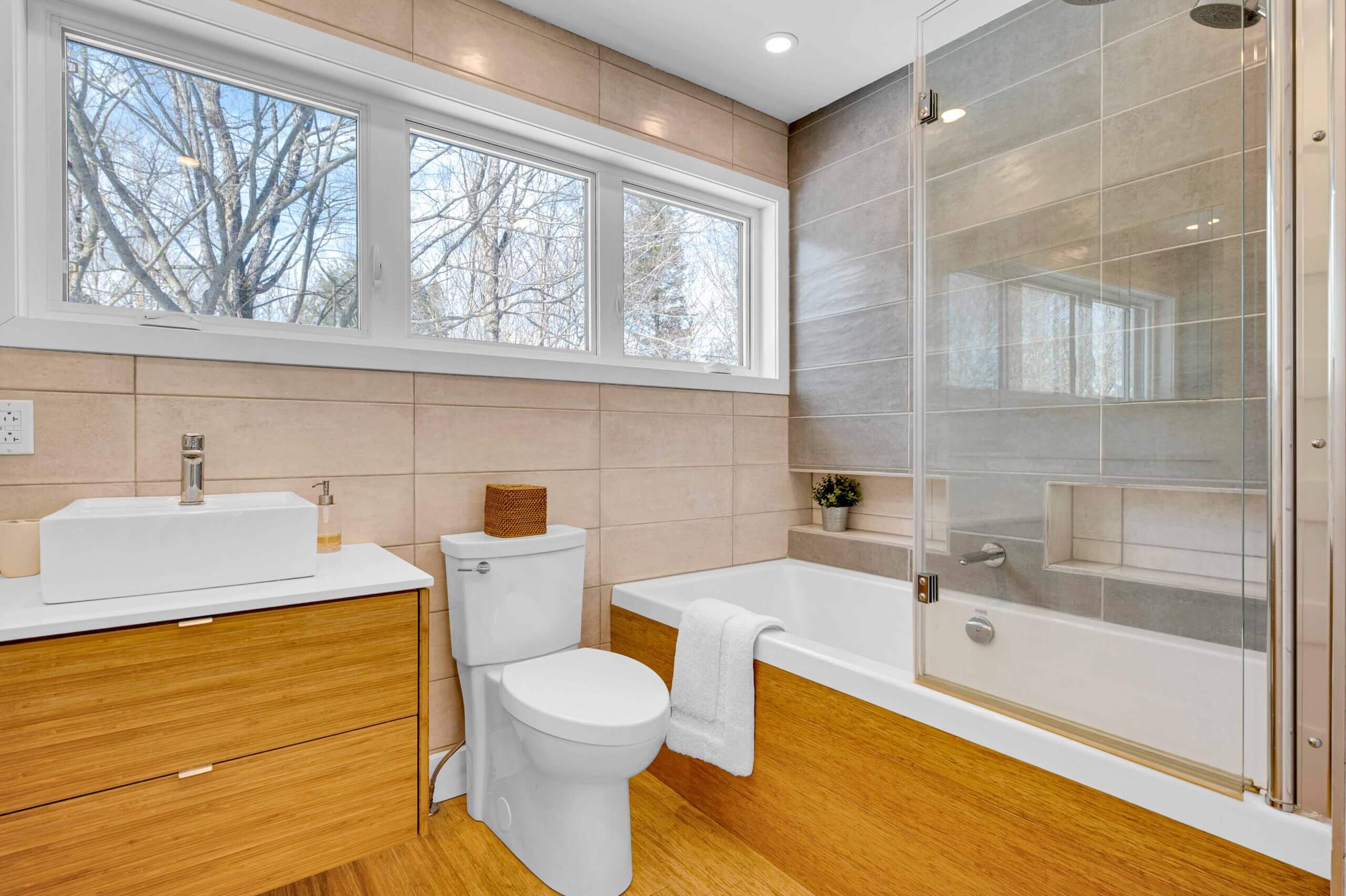
Bamboo flooring has become a popular alternative to hardwood in Canada. It looks clean, feels warm underfoot, and ticks the eco-friendly box. But bathrooms are a different beast. Constant moisture, steam, and temperature swings push any flooring material to its limits.
So the real question isn’t “Can you use bamboo in a bathroom?” It’s which type, under what conditions, and at what risk. The answer is more nuanced than most guides suggest.
Why Are Bathrooms Tough on Bamboo?
Bamboo is not waterproof. It’s moisture reactive.
That means:
- It absorbs water from the air
- It expands when humid
- It shrinks when dry
Now combine that with Canadian conditions:
Winter: Very dry indoor air
Bathroom use → sudden spikes in humidity
This creates a cycle of:
Expansion → contraction → stress
Over time, that leads to:
- Gaps between planks
- Warping or cupping
- Surface cracks
In simple terms, bamboo is constantly adjusting. Bathrooms make that adjustment extreme.
Think All Bamboo Flooring Is the Same? Not Even Close
This is where most people get it wrong. “Bamboo flooring” isn’t one thing.
1. Horizontal and Vertical Bamboo (Avoid)
These are the most basic forms.
- Lower density
- More natural structure
- Highly sensitive to moisture
Not recommended for bathrooms at all
2. Strand-Woven Bamboo (Better, But Limited)
This is bamboo on steroids.
- Fibers are compressed under extreme pressure
- Much harder than traditional hardwood
- More resistant to moisture
Still, it’s not waterproof.
3. Engineered Bamboo (Conditional Option)
This is bamboo layered over a plywood core.
- More stable than solid bamboo
- Handles humidity changes better
- Less expansion and contraction
However, it is not ideal for heavy water exposure.
4. Rigid Core Bamboo (Best Choice)
This is where things change.
- Waterproof core (stone + plastic composite)
- Real bamboo layer on top
- Minimal movement with humidity
This is the only bamboo flooring type truly suitable for full bathrooms. If you’re serious about using bamboo, this is the one to look at.
| Bamboo Flooring Type | Moisture Performance | Bathroom Suitability |
|---|---|---|
| Horizontal / Vertical | Low | Not recommended |
| Strand-Woven | Better, but not waterproof | Limited |
| Engineered Bamboo | Better stability | Conditional |
| Rigid Core Bamboo | Excellent | Most suitable |
Density Decides Everything!
Denser materials absorb less moisture. That’s why strand-woven and rigid core products perform better.
This same focus on density and engineered construction is also found in BamBüPly® bamboo plywood, designed for applications where strength and dimensional stability matter.
Quick comparison:
- Standard bamboo: moderate density, high movement
- Strand-woven: very dense, less movement
- Rigid core: stable core, almost no movement
Therefore, less movement = fewer problems over time.
The Hidden Factor: Canadian Climate
Canada adds another layer of complexity, where indoor humidity can drop below 25% during winter, creating extremely dry conditions. At the same time, everyday activities like hot showers cause sudden spikes in moisture, turning bathrooms into small, fluctuating micro-climates.
This leads to stress like:
- Shrinking in winter
- Swelling after showers
- Ideal conditions for bamboo:
- Humidity: 40–60%
- Temperature: 15–27°C
Anything outside this range increases failure risk.
Installation Makes or Breaks It
You can buy the best bamboo flooring in the world and still ruin it with poor installation. Must-do basics:
- Flat subfloor (no dips or bumps)
- Moisture testing before installation
- Proper underlayment with vapor barrier
- Bathroom-specific steps:
- Seal expansion gaps with silicone
- Protect joints from water penetration
- Ensure tight plank connections
Skipping these steps is asking for trouble.
Maintenance: This Is Where Most Fail
Bamboo flooring in bathrooms needs discipline. It doesn’t need effort; only discipline.
What to do:
- Use a slightly damp mop only
- Clean spills immediately
- Use pH-neutral cleaners
- What to avoid:
- Wet mopping
- Steam cleaners
- Harsh chemicals (bleach, ammonia, vinegar)
Even small habits can shorten the floor’s life.
Simple Habits That Make a Big Difference
These are small changes that prevent big problems:
- Place breathable mats near sinks and showers
- Avoid rubber-backed rugs (they trap moisture)
- Use exhaust fans during and after showers
- Maintain indoor humidity with a humidifier
Think of it as climate management, not just cleaning.
Common Problems (And Why They Happen)
Here’s what typically goes wrong:
- Gaps between planks → air too dry
- Cupping edges → moisture imbalance
- Mold or discoloration → trapped water
- Finish damage → wrong cleaning products
- Joint failure → uneven subfloor
None of these are random. They’re predictable!
Is Bamboo Still Worth It?
Honestly? Yes… but only if you know what you’re signing up for.
Bamboo in a bathroom can look really good. Warm, clean, slightly different from the usual tile-everywhere vibe. But it’s not the kind of flooring you install and forget about for the next 10 years.
If you like the idea of a natural wood look, don’t mind a bit of upkeep, and you’re choosing the right type like rigid core, then bamboo can absolutely work. It’s for people who care about how their space feels, not just how it functions.
On the flip side, if you want something completely hands-off, this isn’t it. A busy bathroom with constant splashes, poor ventilation, or zero humidity control is basically a stress test for bamboo. And it won’t win that test.
When you stack it up against other options, bamboo kind of sits in the middle. Luxury vinyl is the easygoing, low-maintenance option. Tile is the tough, no-nonsense choice that lasts forever but feels a bit cold. Bamboo? It’s the stylish middle ground. Looks great, feels great, but expects you to meet it halfway.
Conclusion
So here’s the real deal. Bamboo flooring in Canadian bathrooms isn’t a simple yes or no, it’s more of a “yes, if you do it right.” Regular bamboo is best avoided, engineered needs some caution, and rigid core is your safest bet.
It all comes down to moisture. Manage it well, and bamboo can look great and last. Ignore it, and problems show up fast. Bamboo isn’t fragile, it’s just honest. It reacts to whatever environment you give it.
If you’re willing to keep things controlled, it’s a solid, stylish choice. If not, you’re better off with something that doesn’t care!

0 Comments