
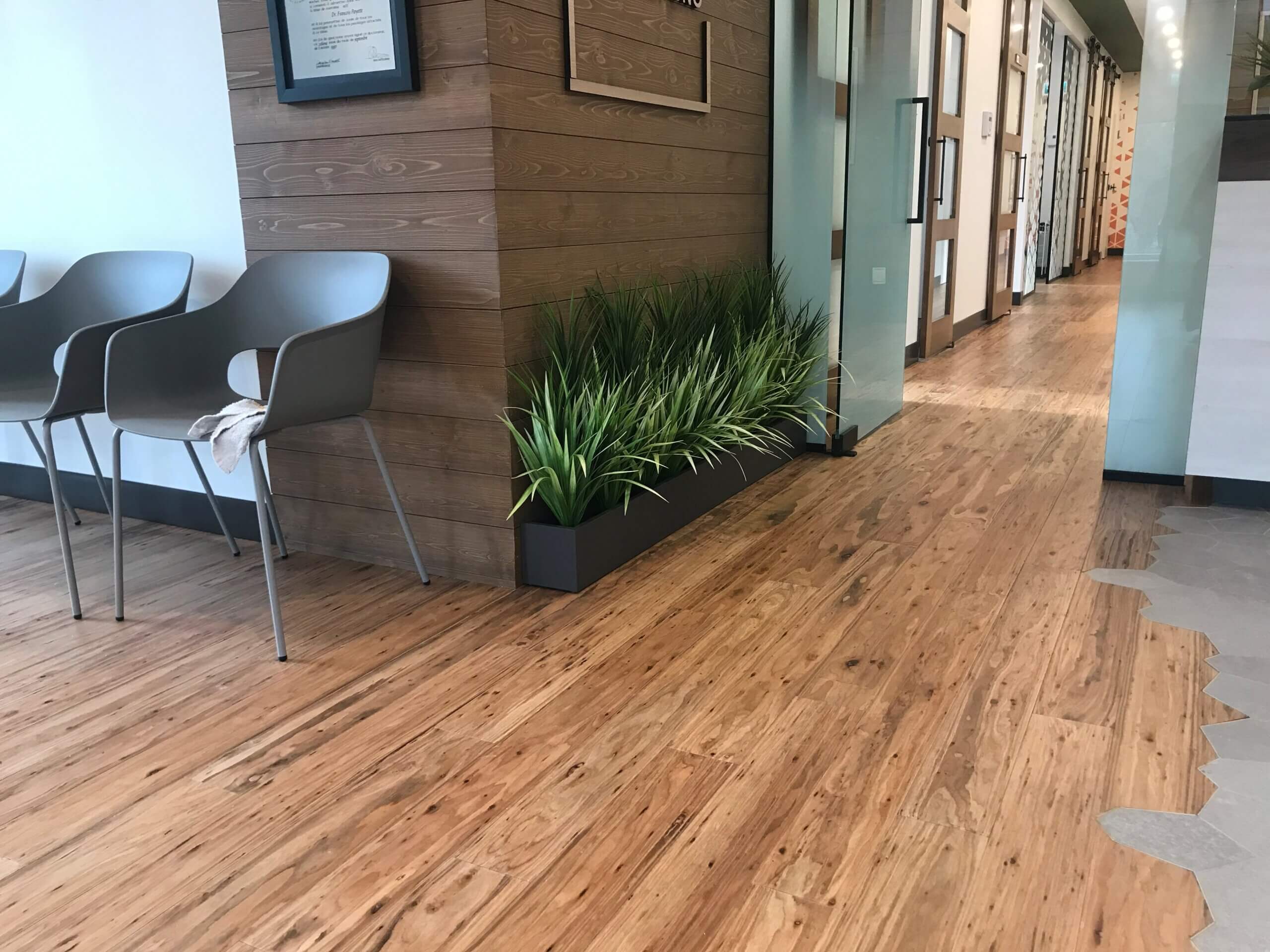
Bamboo flooring looks simple on the surface. It’s natural, modern, and often marketed as a sustainable alternative to hardwood. But once you start comparing options, things get confusing quickly.
That’s because “bamboo flooring” isn’t one product. It comes in different constructions, and each one behaves differently in real homes. Some handle moisture better. Some are much harder. Some are easier to maintain.
If you’re choosing between solid, engineered, and strand-woven bamboo, understanding these differences will save you from expensive mistakes later.
What Makes Bamboo Unique?
Most bamboo flooring is made from Phyllostachys edulis, a species known for its strength and fast growth. Unlike hardwood trees that take decades, bamboo matures in about 5 to 7 years.
But here’s the catch. Bamboo is not uniform like wood. Its outer fibers are dense and strong, while the inner core is softer. This uneven structure is exactly why manufacturing matters so much. Beyond flooring, engineered bamboo products such as BamBüWall® demonstrate how bamboo can be transformed into durable architectural surfaces for interior applications.
Before it becomes flooring, bamboo is processed to stabilize it:
- Boiled to remove sugars and prevent pests
- Kiln-dried to control moisture
- Sometimes carbonized to create darker tones
Carbonization improves aesthetics, but it comes at a cost. It can reduce hardness by up to 30 percent. So darker bamboo is usually softer than lighter versions.
Before You Pick Bamboo, Read This!
Don’t make the mistake of rushing into choosing whatever bamboo comes your way. Let’s evaluate the types of bamboo flooring and every important detail that you must know about them.
Solid Bamboo Flooring
Solid bamboo is the most traditional form. It’s made by compressing strips of bamboo into planks, similar to how hardwood flooring is constructed.
It comes in two main styles. Horizontal bamboo shows the natural nodes, giving it a more organic look. Vertical bamboo is more uniform and linear, which fits modern interiors better.
In terms of performance, solid bamboo behaves a lot like wood flooring. It has moderate hardness, typically comparable to oak, and it can be refinished several times over its lifespan.
Key characteristics:
- Hardness: ~1380–1700 Janka
- Natural grain appearance
- Refinishable multiple times
That said, it’s not the most forgiving option. That’s because:
- It expands and contracts with humidity
- Not suitable for damp environments
- Can warp if conditions fluctuate too much
Solid bamboo works best in stable, climate-controlled areas where moisture isn’t a constant issue.
Engineered Bamboo Flooring
Engineered bamboo is designed to fix the biggest weakness of solid bamboo: movement.
Instead of a full bamboo plank, it uses a layered structure. A thin bamboo surface sits on top of a stable core made from plywood or high-density fiberboard. These layers are arranged in different directions to balance internal stress.
The result is a floor that handles moisture and temperature changes much better. This makes engineered bamboo far more versatile:
- Works well over concrete subfloors
- Suitable for basements
- Compatible with radiant heating systems
Installation is also easier, especially with click-lock systems that don’t require nails or glue.
However, there are trade-offs:
- The top layer is thin, so refinishing is limited
- Quality varies depending on the manufacturer
- It may not feel as solid underfoot
If your home has humidity fluctuations, engineered bamboo is usually the safer choice.
Strand-Woven Bamboo Flooring
Strand-woven bamboo is a completely different category. It’s not just assembled, it’s rebuilt.
Instead of strips, bamboo is shredded into fibers, mixed with resin, and compressed under extreme pressure. This process creates an ultra-dense material that’s far stronger than traditional bamboo flooring.
This densification process is also used in high-performance products such as Densified™ bamboo flooring, engineered for exceptional hardness, durability, and long-term performance.
The numbers back that up.
- Hardness: 3000–5000 Janka
- Around three times harder than oak
In real terms, that means better resistance to scratches, dents, and heavy use. It’s ideal for homes with pets, kids, or constant foot traffic.
But that strength comes with some downsides:
- It’s harder to cut and install
- Refinishing is more difficult
- It cannot be stained after installation
It also looks less like traditional bamboo and more like hardwood, which some people prefer and others don’t.
Quick Comparison
Here’s a simple way to think about it.
| Flooring Type | Main Strength | Moisture Performance | Best For |
|---|---|---|---|
| Solid Bamboo | Natural look & refinishing | Moderate | Stable, climate-controlled spaces |
| Engineered Bamboo | Stability & flexibility | Better | Basements & changing conditions |
| Strand-Woven Bamboo | Exceptional durability | Good | Pets, kids & heavy traffic |
Solid bamboo
- Best for natural aesthetics
- Can be refinished
- Needs stable conditions
Engineered bamboo
- Best for stability and flexibility
- Handles moisture better
- Limited refinishing
Strand-woven bamboo
- Good for durability
- Handles heavy wear easily
- Harder to work with
Practical Things Most People Miss
Flooring isn’t just about picking a type. A few hidden factors can make or break your experience.
First, bamboo reacts strongly to its environment. Keeping indoor humidity between 40 and 60 percent is critical. Too dry, and gaps form. Too humid, and the planks swell.
Second, not all bamboo floors are equal in terms of indoor air quality. Since adhesives are used in manufacturing, it’s worth checking what type is used.
- UF adhesives are cheaper but release more emissions
- PF and MDI options are more stable and safer
Finally, color can be misleading. Darker bamboo often looks premium, but it’s usually softer due to the carbonization process.
Conclusion
There’s no single “best” bamboo flooring. It depends on what you value most.
If you care about a natural look and the option to refinish, solid bamboo still holds up well. If your space has moisture challenges or tricky subfloors, engineered bamboo is the practical choice.
However, if durability is your top priority, strand-woven bamboo is easily the strongest option available.
Choose based on how your space actually functions, not just how you want it to look. That’s the difference between a floor that lasts and one that causes problems later.

0 Comments