
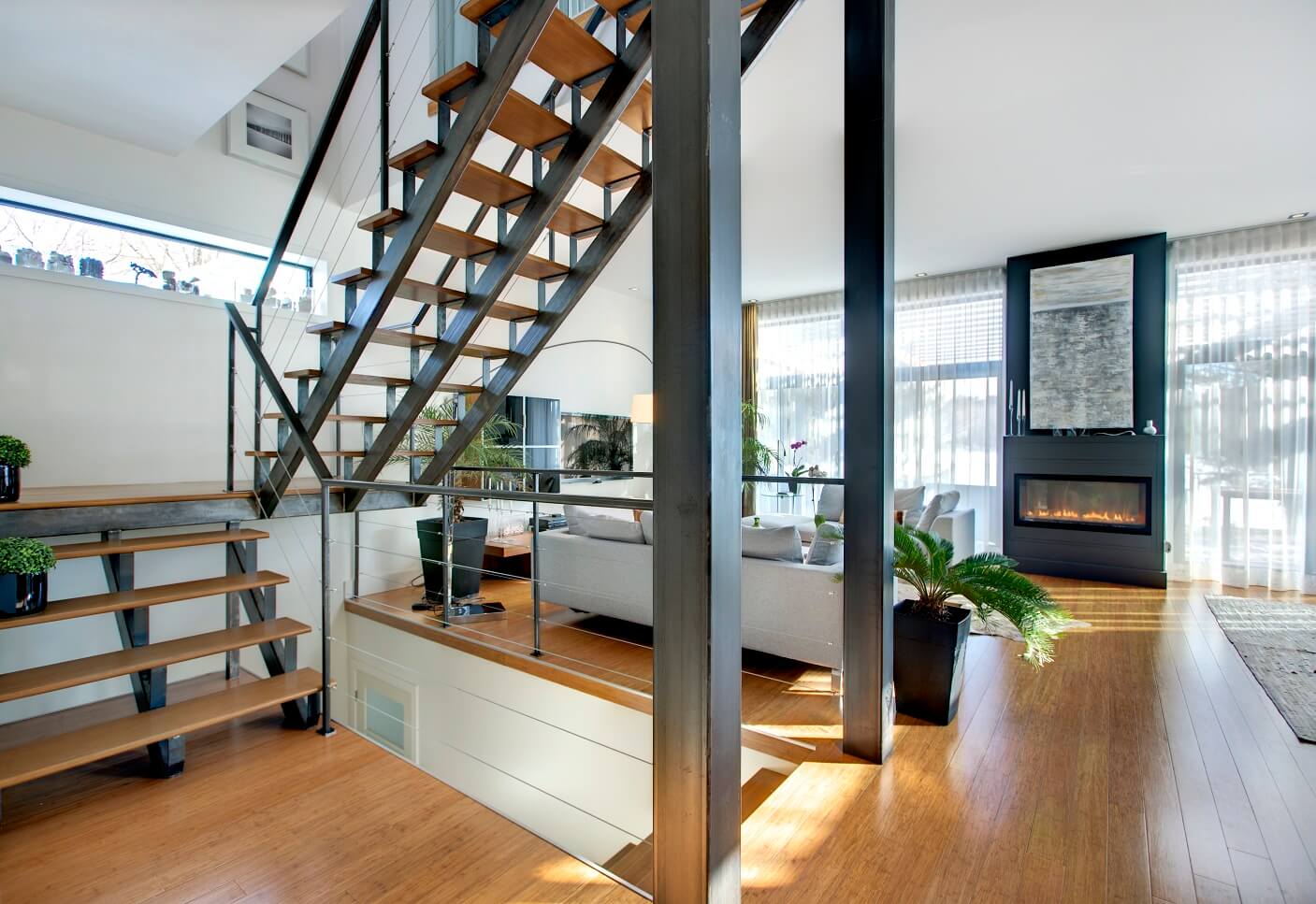
Basements in Canada are tricky.
They sit below grade, surrounded by soil, resting on concrete that quietly absorbs and releases moisture all year. Add cold temperatures and wild humidity swings, and you’ve got one of the toughest environments in your home.
That’s why most advice plays it safe. Vinyl. Tile. Maybe epoxy. However, here’s the shift.
Solid strand-woven bamboo is proving itself as a serious contender in basement flooring. Not as a compromise, but as a high-performance option when installed correctly..
Let’s break it down in a way that actually helps you decide.
First, Understand the Enemy: Your Basement
Before we talk about materials, you need to understand what you’re fighting.
- Concrete isn’t waterproof. It’s porous
- Moisture moves through it via capillary action
- Soil pressure can push water inward
- Floors stay cold because they’re touching the earth
- Humidity swings hard: In winters; dry air (can drop below 20%) whereas in summers; humid air (can exceed 70%)
That combination causes most flooring failures.
So the real question isn’t “What flooring is best?” It’s “What flooring system can handle this environment?”
The Big Idea: Flooring Is a System, Not a Product
This is where most people go wrong. A successful basement floor has layers:
- Moisture barrier
- Subfloor (air gap + insulation)
- Finished flooring
Skip one, and even the best material can fail. Get it right, and even natural materials like bamboo become viable!
Solid Strand-Woven Bamboo: The Proven Performer
Let’s address something upfront.
Not all bamboo flooring is the same. When it comes to real-world performance, solid strand-woven bamboo stands in a category of its own.
What Makes Solid Bamboo Different?
Unlike layered or engineered options, solid strand-woven bamboo is made by:
- Shredding bamboo fibers
- Compressing them under extreme pressure
- Binding them into dense, solid planks
The result is a material that is incredibly dense, highly durable, and built for long-term performance. This isn’t a workaround product. It’s the original, time-tested solution.
Why It Works in Canadian Basements
Solid strand-woven bamboo has already proven itself across:
- Basements
- Kitchens
- Bathrooms
- Large commercial spaces
- Direct installations over concrete
Beyond flooring, engineered bamboo products like BamBüPly® can bring the same focus on strength, durability, and material efficiency to other interior applications.
Oh and, not just in ideal conditions. When properly installed, it delivers consistent performance even in environments that demand more from flooring materials.
Let’s Talk Strength (Because It’s Impressive)
Strand-woven bamboo is seriously tough. With a Janka hardness rating of 3000+, it’s harder than oak, maple, and even many exotic hardwoods.
This is what it means for your basement:
- Better resistance to dents and surface damage
- Handles heavy furniture with ease
- Stands up well to daily foot traffic
- Works perfectly in multi-use spaces like gyms, lounges, or play areas
So no, it’s definitely not “delicate.”
Installation Isn’t a Detail, It’s the Whole Game!
Most flooring failures aren’t about the material, they come down to installation. In Canadian homes, especially basements, flooring is often installed over concrete, which is rarely level enough for direct glue-down. Leveling it properly can be complex and expensive, so in most residential cases, floating floors become the go-to solution.
That said, floating doesn’t mean simple. It requires careful planning to handle movement and prevent long-term issues. The most common installation methods in residential settings are as follows:
- Nailed down: over a wood subfloor (plywood)
- Glued down: over wood or properly prepared concrete (often with radiant heating systems)
- Floating floors: over wood or concrete using a suitable underlayment (most common)
Direct glue-down over concrete is typically limited to:
- Radiant heating systems
- Commercial environments where the slab is fully leveled
Why Do the Details Matter?
Floating floors naturally expand and contract, especially in Canada’s fluctuating indoor conditions. If this movement isn’t managed properly, problems show up quickly.
Key elements that cannot be ignored:
- Expansion gaps around the perimeter
- T-molding for long spans to control movement
- Proper transitions and thresholds at doorways
These aren’t small finishing touches, they’re essential for performance!
How It Compares to Other Basement Flooring
Let’s keep it real. Bamboo isn’t the only option.
| Flooring Type | Moisture Resistance | Key Benefit | Best For |
|---|---|---|---|
| Strand-Woven Bamboo | Good* | Warm, durable & natural | Dry, properly prepared basements |
| Luxury Vinyl (SPC) | Excellent | Waterproof & stable | Moisture-prone spaces |
| Porcelain Tile | Excellent | Extremely durable | Wet or flood-prone basements |
| Epoxy / Concrete | Excellent | Durable & low-maintenance | Gyms, storage, modern spaces |
| Carpet Tiles | Low | Warm & comfortable | Dry, comfort-focused spaces |
Here’s how it stacks up.
Luxury Vinyl Plank (SPC)
- Fully waterproof
- Extremely stable
- Handles moisture with zero drama
But:
- Feels synthetic
- Less warmth and character
Best for: zero-risk decisions
Porcelain Tile
- Completely water-resistant
- Extremely durable
But:
- Cold without heating
- Hard underfoot
Best for: wet or flood-prone basements
Epoxy / Concrete
- No organic material
- Very durable
But:
- Cold
- Not cozy
Best for: gyms, storage, modern aesthetics
Carpet Tiles
- Warm and comfortable
- Good insulation
But:
- Moisture risk
- Not flood-friendly
Best for: dry, comfort-focused spaces
What Conditions Make Bamboo a Great Choice?
Solid strand-woven bamboo performs best when:
- Basement is finished and sealed
- No history of water intrusion
- Moisture levels are controlled
- Proper installation method is used (glue-down or nail-down)
- Expansion gaps are respected
If that’s your setup, bamboo isn’t just viable. It’s one of the best-looking options you can choose!
Cost Reality (Canada 2026)
Here’s where it lands:
- Solid strand-woven bamboo: $8–14 per sq ft installed
- Vinyl (SPC): $8–13.5
- Tile: $10.8–22.9
- Subfloor: +$3–5.5
So yes, bamboo is competitive. However, the real investment is doing it properly.
Conclusion
Basement flooring in Canada has always come down to one thing: managing risk.
That’s why synthetic options tend to lead the conversation. They’re predictable, moisture-resistant, and easy to trust in a challenging environment.
However, solid strand-woven bamboo offers a different perspective.
It’s not trying to compete with vinyl on waterproofing. Instead, it offers something more refined when the conditions are right.
It offers a warmer feel underfoot, with a natural and authentic look. Moreover, it creates a space that feels less like a basement and more like a true extension of your home.
When your basement is dry and properly prepared, solid bamboo isn’t a compromise. It’s a proven upgrade!

0 Comments