
Let’s start with a slightly uncomfortable truth.
When people set up a home gym or exercise room, they obsess over equipment. The treadmill gets researched. The dumbbells get compared. The yoga mat gets upgraded.
Meanwhile, the floor… gets ignored.
Which is funny, because the floor is doing most of the work. It absorbs impact, supports balance, reduces noise, and decides whether your knees feel great or slightly offended after every workout.
Bad flooring can ruin a perfectly good fitness space. Fortunately, bamboo flooring solves a lot of these “flooring” problems quietly and without drama. Oh and yes, it’s tougher than most people expect.
If you are exploring flooring options for your exercise room, feel free to request our bamboo flooring samples.
Why Bamboo Flooring Is Ideal for Exercise Rooms
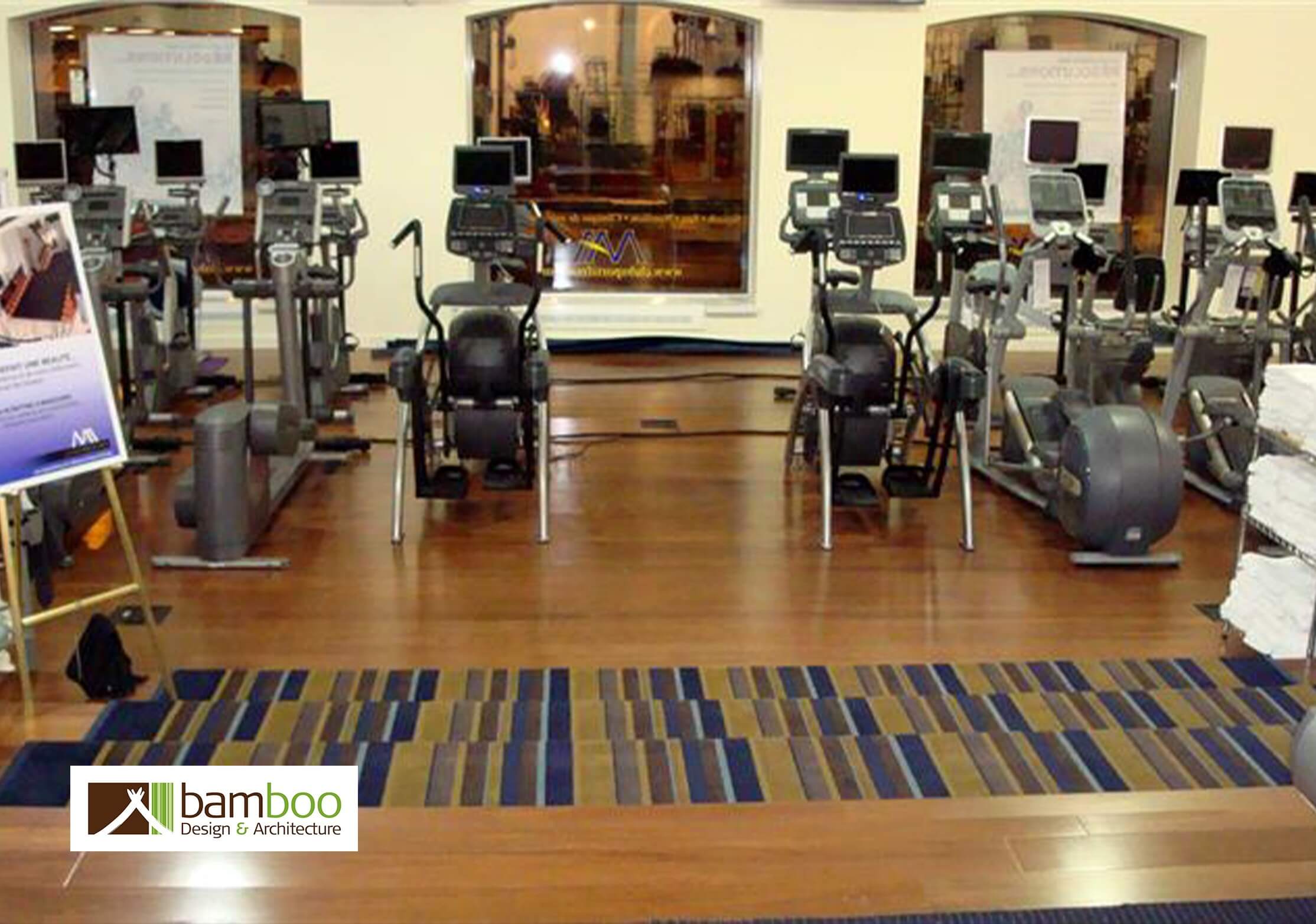
Why Bamboo Flooring Though?
Bamboo flooring might not be the first material people think of for an exercise room, but it checks more boxes than you’d expect. It’s tough, comfortable underfoot, and surprisingly sustainable.
If you’re building a workout space, here are the reasons why you should go for bamboo flooring.
Let’s Talk Strength (Because Gym Floors Take a Beating)
Workout spaces are not gentle environments.
People jump, equipment vibrates, and dumbbells get dropped. Sometimes accidentally and sometimes with enthusiasm.
To understand durability, flooring manufacturers use something called the Janka hardness scale. It measures how much force is needed to dent the material.
Here’s how common flooring materials compare:
| Flooring Material | Janka Hardness | Exercise Room Benefit |
|---|---|---|
| Red Oak | 1,290 | Good everyday durability |
| Hard Maple | 1,450 | Hard and durable |
| American Hickory | 1,820 | Very high hardness |
| Brazilian Cherry | 2,350 | Excellent hardness |
| Strand-Woven Bamboo | 3,000–5,000 | Exceptional durability for heavy use |
That means some bamboo floors are more than three times harder than red oak. For an exercise room, that toughness matters.
For exercise rooms that see heavy equipment, frequent movement, and high daily traffic, Densified™ bamboo flooring offers a high-hardness option designed for demanding residential and commercial applications.
It means the floor can handle:
- treadmills and stationary bikes
- repetitive foot traffic
- moving equipment around
- years of workouts without looking tired
A floor that survives burpees is a floor worth respecting.
Your Knees Will Notice the Difference
Strength alone doesn’t make a good workout floor. Concrete is extremely strong, but no one wants to do squats on a garage slab for long.
The key is controlled resilience.
Bamboo has a subtle elasticity. The fibers compress slightly under pressure and rebound afterward. That tiny amount of flex helps absorb some of the impact generated during exercise.
This reduces stress on:
- knees
- hips
- ankles
- lower back
Yoga practitioners notice this immediately. Stretching, lunges, and balance poses feel far more comfortable on bamboo than on tile or stone.
Many studios improve this further by installing bamboo as a floating floor system with underlayment.
That setup adds a thin cushioning layer that helps absorb impact energy.
In simpler terms: your joints get a break.
Balance Matters Too
An exercise floor needs to walk a very specific line.
Too slippery and you risk sliding during movement. Too sticky and it feels awkward during transitions. Bamboo flooring generally lands right in the sweet spot.
Most bamboo floors meet slip resistance benchmarks used in building safety standards. The coefficient of friction typically exceeds 0.5, which is considered safe for movement. This makes bamboo ideal for activities that require balance and stability.
With bamboo; sweaty palms are undefeated!
A Gym That Doesn’t Feel Like a Basement

Let’s be honest.
Many gyms look like storage rooms with dumbbells. However, bamboo (and eucalyptus) flooring changes the mood instantly.
Natural grain patterns add warmth to the room. The color tones feel calm and organic rather than industrial. Even the surface temperature is more comfortable than tile or vinyl.
This is one reason bamboo flooring shows up frequently in:
- yoga studios
- Pilates spaces
- wellness centers
- boutique fitness studios
A space that feels welcoming encourages people to spend more time there.
Let’s Talk About the Air You Breathe
Exercise rooms involve a lot of breathing.
Deep breathing. Heavy breathing. Sometimes dramatic breathing after a brutal workout. Because of that, indoor air quality matters more than usual.
Some flooring products release chemicals known as volatile organic compounds (VOCs). These can originate from adhesives, finishes, or synthetic materials. High quality bamboo flooring manufacturers have taken this seriously.
Many products now use:
- no added urea formaldehyde adhesives
- extremely low VOC finishes
- third party air quality testing
Certifications such as FloorScore verify that the flooring meets strict indoor air emission standards.
Especially for homeowners, this means the workout space stays cleaner and healthier. Which is exactly what a fitness room should support.
Quieter Workouts (Your Neighbors Will Appreciate This)
Exercise rooms are not exactly silent.
Weights clank, feet land during jumps, and music plays in the background. And sound travels easily through building structures. Bamboo flooring systems can help reduce this noise when paired with the right underlayment.
Acoustic performance improves significantly when bamboo is installed with:
- foam underlay
- recycled rubber layers
- cork underlayment
These materials absorb vibrations before they travel through the structure. In multi level homes or apartment buildings, this can make a noticeable difference.
Less echo means impact noise. This means fewer complaints from downstairs!
Sustainability Is the Quiet Superpower
Bamboo’s environmental advantage deserves attention.
Traditional hardwood forests require decades to mature. Harvesting them also requires replanting and careful forest management. However, bamboo behaves differently.
After harvesting, the plant continues growing from the same root system. No replanting required. The benefits are impressive as well:
- harvest cycle of five to seven years
- rapid regeneration
- strong carbon absorption during growth
Because of these qualities, bamboo is often classified as a rapidly renewable material. Many bamboo flooring products also qualify for green building certifications such as:
- FSC certification for responsible forestry
- FloorScore indoor air quality standards
- LEED building credits
For sustainable construction projects, bamboo checks a lot of boxes.
The Foundation of a Great Workout Space
People often think exercise rooms are about equipment. However, the floor quietly shapes the entire experience.
It affects comfort, stability, and durability. Even the air quality in the room.
Bamboo flooring manages to strike a rare balance. It’s strong enough to handle years of workouts, and sustainable enough to fit modern eco-friendly building goals. Plus as a bonus, it actually looks good doing all that heavy lifting.
Which means the next time someone is planning a home gym or studio, they might want to start from the ground up.
Quite literally.

0 Comments