
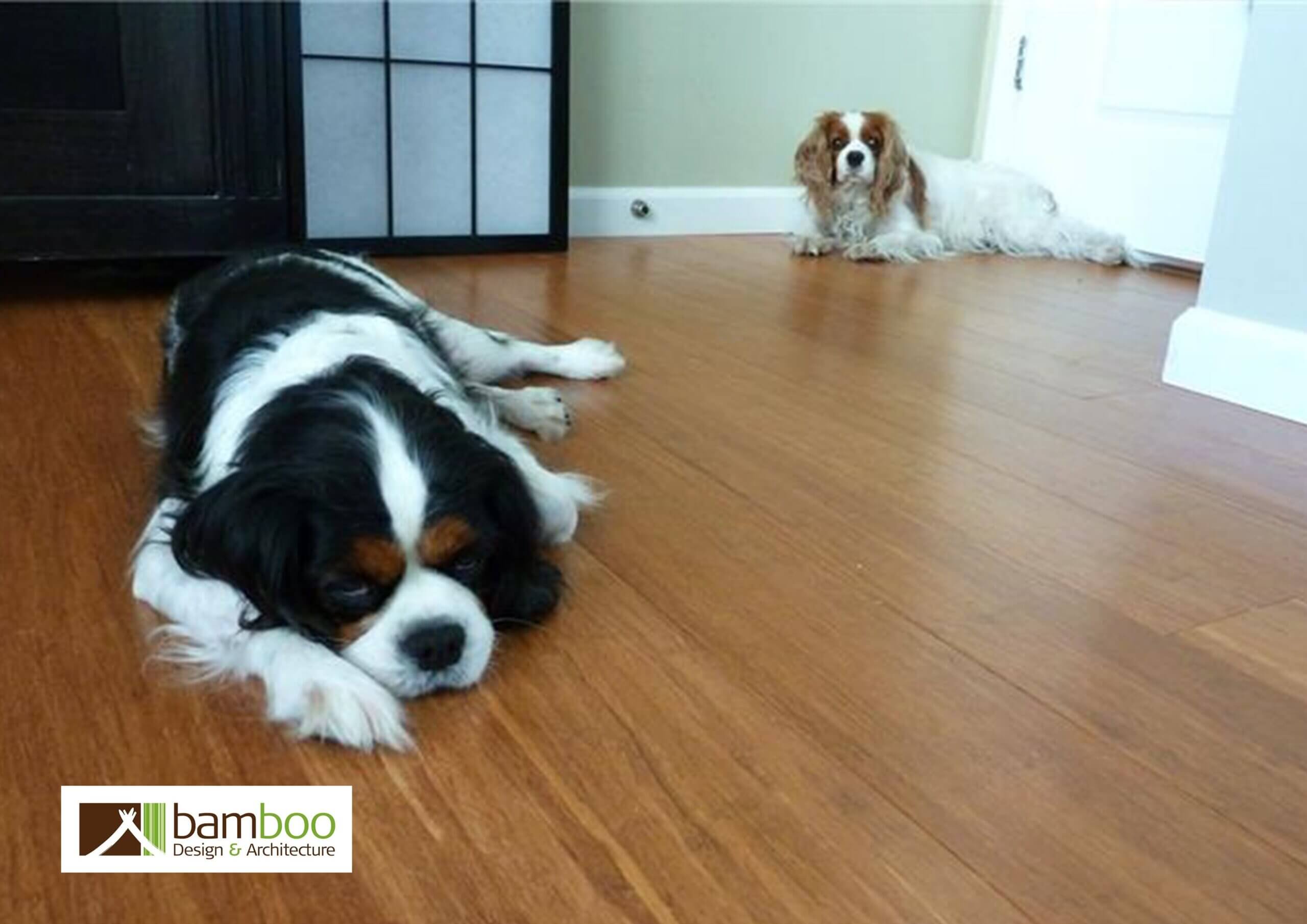
Pets are absolutely wonderful. However, floors… might disagree.
Dogs sprint across hallways like they’re qualifying for the Olympics. While cats treat furniture as launch pads. Oh and let’s not forget the winter walks; they bring in mud, snow, and road salt.
All of that ends up on your floor.
In Canada, flooring also deals with brutal seasonal changes. Dry winters shrink materials. Whereas humid summers make them expand.
So a good pet-friendly floor must do a few things well. It should resist scratches, and handle moisture. Moreover, it should stay stable in changing climates, and give pets enough grip to run safely.
Several flooring options can handle this lifestyle. But one material keeps gaining attention for the right reasons. That’s bamboo!
Let’s start with what makes flooring pet-friendly, then dive into why bamboo is becoming a favorite.
What Makes Flooring Pet-Friendly?
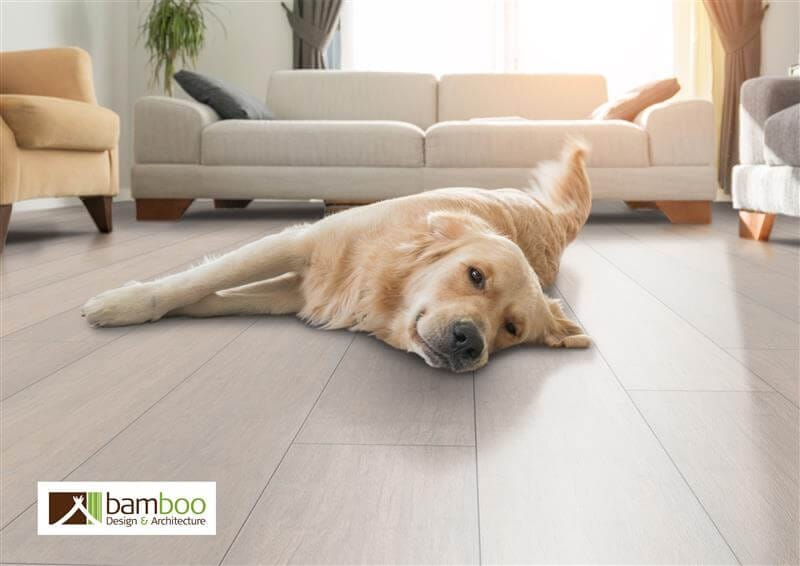
Not all floors survive life with pets.
A good pet-friendly floor needs a few important traits.
- Scratch resistance to handle claws
- Durability for heavy daily traffic
- Moisture resistance for spills or accidents
- Easy cleaning for fur and dirt
- Good traction so pets do not slip
Canadian homes also introduce another challenge: climate.
Indoor humidity changes dramatically throughout the year. Typical conditions include:
- winter humidity below 20% because of heating
- summer humidity above 60% in some regions
Most flooring materials perform best when indoor humidity stays between:
- 40–60% relative humidity
- 15–27°C indoor temperature
Therefore, floors that remain stable under these conditions last much longer.
Why Bamboo Flooring Is Gaining Popularity
Bamboo flooring looks like hardwood. But it behaves a little differently. That difference is exactly why pet owners are starting to notice it.
Strand-Woven Bamboo Is Extremely Hard
It’s essential to understand that not all bamboo flooring is created equal. Traditional bamboo floors are made by gluing bamboo strips together. These typically score around 1,100–1,400 on the Janka hardness scale, similar to oak.
That works fine for many homes. But strand-woven bamboo is a different animal.
The manufacturing process looks like this:
- Bamboo fibers are shredded
- The fibers are soaked in resin
- Everything is compressed under enormous pressure (sometimes more than 2,000 tons)
- The final material is incredibly dense
Typical numbers:
- Janka hardness: 3,000 – 5,000+
- Density: roughly 1,050 – 1,150 kg/m³
For comparison:
- Red oak: 1,290
- Hard maple: 1,450
In simple terms, strand-woven bamboo can be two or three times harder than common hardwood floors. That toughness helps it resist claw scratches and dents.
Isn’t it good news if your dog likes sudden indoor sprints? Well, indeed it is!
Bamboo Handles Impact Well
Durability is not just about hardness. Bamboo fibers also absorb impact slightly better than many woods. That means when pets jump or run, the fibers compress a little and bounce back.
It is not a trampoline-level bounce. But it helps prevent deep dents. Over time, that resilience adds up.
Bamboo Is Not Wood
Bamboo is actually grass.
That might sound strange for flooring, but it explains a lot. Bamboo fibers grow in tight bundles. These bundles give the material impressive strength once it is processed into flooring.
Think of it as nature’s version of fiber-reinforced material. Strong, flexible. Oh and surprisingly tough.
Engineered Bamboo vs Solid Bamboo in Canadian Homes
Canada’s climate is pretty tough on flooring. Winter air dries materials out, whereas summer humidity pushes moisture back in. Solid bamboo reacts to those changes just like wood, which is normal for any natural material.
To address this, manufacturers developed engineered bamboo flooring. Instead of a solid bamboo plank, engineered floors use a bamboo wear layer on top of a multi‑layer core. Some cores are plywood, others are rigid composite materials known as SPC. These constructions can improve dimensional stability on paper.
However, not all engineered cores react the same way in real homes. In unstable or humid environments, poor‑quality engineered products may be more prone to internal stress and cracking along the board. Once the thin bamboo wear layer is damaged, repairs are limited. Solid strand‑woven bamboo, when properly installed with expansion gaps and transition T‑mouldings where needed, can offer a thicker wear layer, the possibility of refinishing, and excellent performance even in busy homes with pets.
In practice, choosing between solid and engineered bamboo depends on the project. For many Canadian households with pets, a high‑quality solid strand‑woven bamboo, installed by professionals who respect humidity and expansion rules, remains a very reliable option.
Bamboo Can Improve Indoor Air Quality
Pets spend most of their time near the floor. They sleep there, and play there. Sometimes even lick it. So indoor air quality matters.
Some flooring products release chemicals called VOCs. These gases can irritate lungs over time. High-quality bamboo flooring is often tested for emissions.
However, it is important to look for certifications such as:
- FloorScore
- CARB Phase 2
- FSC certification
These standards ensure low emissions and responsible sourcing. For households with pets and kids, that peace of mind matters.
The Right Finish Helps Pets Stay Upright
Slippery floors can cause injuries. Your pets running at full speed around corners need grip.
Certain bamboo finishes improve traction:
- matte finishes
- satin finishes
- brushed or textured surfaces
These textures create tiny grip points for claws.
While glossy finishes look shiny, they are often too slippery. Matte finishes usually perform better for pets.
Bamboo Is Also Environmentally Friendly
Another reason homeowners like bamboo is sustainability.
Hardwood trees take decades to mature. However, bamboo grows far faster.
The typical timeline is:
- Bamboo maturity: around 5 years
- Hardwood trees: 40–60+ years
Once harvested, bamboo regrows from the same root system. No replanting needed. For eco-conscious homeowners, that rapid renewal is a big advantage.
Other Floors That Can Survive Life With Pets
Bamboo performs well, but it is not the only choice. Here are the other common flooring options for pet owners in Canada.
Luxury Vinyl Plank (LVP)
Luxury vinyl plank is probably the most common pet-friendly flooring today.
Reasons people choose it:
- waterproof surface
- scratch-resistant wear layers
- softer feel underfoot
- relatively affordable.
For homes with dogs, experts usually recommend vinyl flooring with a wear layer of at least 20 mil to better handle scratches and daily paw traffic. The trade-off is sustainability.
Vinyl is a plastic-based material derived from petroleum. So while it performs well, it is not the most environmentally friendly flooring choice.
Porcelain or Ceramic Tile
Here is why tile is popular among the house owners:
- complete water resistance
- extremely long lifespan
- excellent durability
The trade-offs are comfort and temperature. Tile is very hard and often cold in winter. Therefore, many homes install radiant heating systems to solve this.
Laminate Flooring
Laminate flooring has improved a lot. Modern versions include abrasion ratings like AC4 and AC5. These ratings indicate strong scratch resistance. Furthermore, laminate is also affordable and easy to install.
The common complaint is traction. Some laminate floors are too smooth, which can make dogs slide during quick turns.
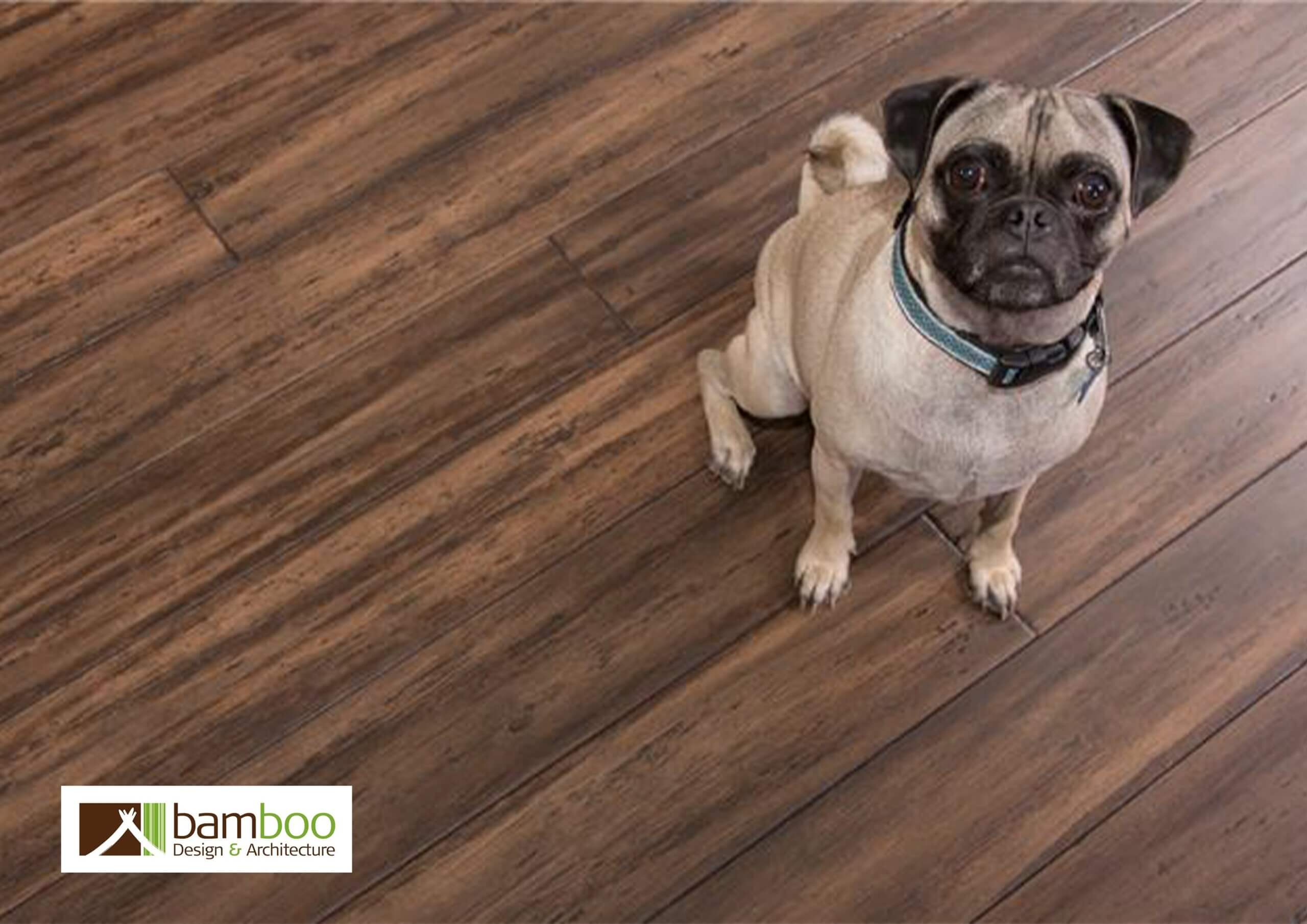
Simple Ways to Protect Your Floors
Regardless of flooring type, a few habits make a big difference.
Pet owners can reduce wear by:
- trimming dog nails regularly
- placing rugs in high-traffic areas
- using entry mats during winter
It’s the little efforts that make a huge difference!
Planning to upgrade to pet-friendly flooring in Canada? Request a sample and experience the difference yourself.